Use the five combinations below at controlled speed. “When to use it” describes the purpose of the drill or the situation you are imagining in shadowboxing; it is not a guarantee that the sequence will work automatically against another person.
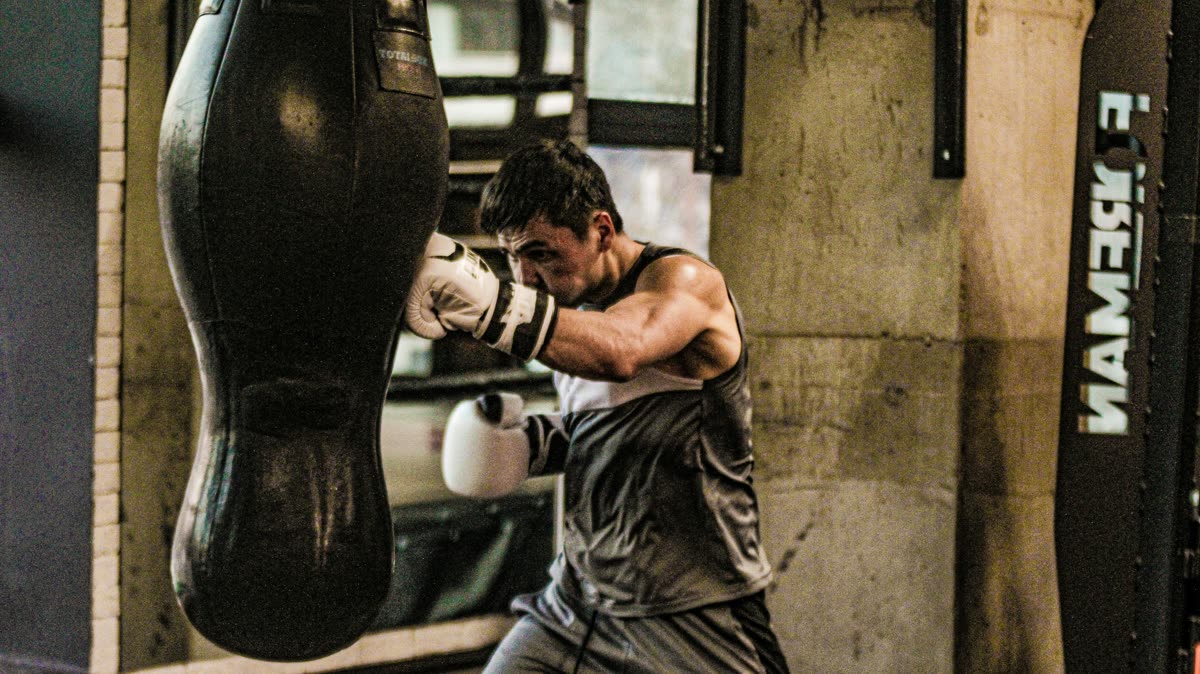
Jab–cross: connect the two straight punches
Purpose: Learn to send the lead hand, return it, and connect the rear straight punch without losing your base.
How to practise it: Throw the jab, let it begin its return, then send the cross down the center. Bring both hands back to guard and pause long enough to confirm that you can step in any direction.
Common error: Reaching with the cross so the head and chest fall beyond the front foot.
Finish: Complete a full reset: hands home, feet organized, eyes forward, breathe. This is the reference combination for the rest of the list.
Double jab–cross: change the rhythm before the rear hand
Purpose: Use two lead-hand actions to find distance and vary timing before the cross.
How to practise it: Make the first jab light and controlled. The second jab can be slightly more committed, but it should still return rather than hanging in front. Add the cross only when your stance remains underneath you.
Common error: Turning the double jab into two arm pushes while the feet and body stop working together.
Finish: Take one small step away or to the side after your hands return. The movement should be quiet and controlled, not a jump.
Jab–cross–lead hook: change the line of attack
Purpose: Move from straight punches to a short lead hook while learning to stay balanced through a direction change.
How to practise it: Throw jab-cross, recover enough structure to rotate the lead side, then deliver a compact hook. Keep the hook within a range you can control; do not swing the arm around the room.
Common error: Letting the rear hand fall while the lead hook travels, or spinning so far that the stance disappears.
Finish: Bring the lead hand back to guard and check that your feet still support you. If the hook pulls you around, shorten it and slow the sequence.
Jab–cross–lead hook–cross: return to the straight line
Purpose: Connect a hook back into the rear straight punch without rushing the transition.
How to practise it: Build the first three punches exactly as above. After the lead hook returns, send the cross only if your stance is still organized. Think of each punch creating the position for the next rather than memorizing four numbers as one blur.
Common error: Speeding up because the combination is longer, then finishing with the rear shoulder and weight falling forward.
Finish: Reset completely or take one small exit. Do not repeat the four punches continuously until the first repetition is clean.
Jab–cross, exit, jab: finish and re-enter
Purpose: Treat movement as part of the combination and practise beginning again from a new position.
How to practise it: Throw jab-cross, return both hands, take a small step back or to an angle, then establish your stance before throwing a fresh jab. The final jab is a new decision, not the third punch of a rushed sequence.
Common error: Crossing the feet during the exit or punching while the stance is still being rebuilt.
Finish: Return the last jab and move freely. This sequence is useful when your main habit is standing in place after punching.
Turn the combinations into useful rounds
Work in short bursts inside the round: one clean repetition, reset, move, then repeat. Progress by changing rhythm or direction before adding speed or power. If a longer sequence deteriorates, return to the first two punches instead of forcing the full combination.
Knockout can pair numbered cues, short demonstrations, and guided rounds with a progressive lesson structure. The combination is only valuable when you understand its purpose and can finish ready for the next action.