You tell yourself to punch faster. Your shoulders tighten, the combination speeds up, and somehow every punch feels worse.
A slow-feeling punch is not automatically a strength problem. Before adding exercises, simplify the movement and check the setup, the punch, and the return. Shoulder tension and a preparatory wind-up are among the technical issues identified in England Boxing’s straight-punch guidance. Neither can be diagnosed from the word “stiff” alone. [1]
The useful question is not “How do I become fast immediately?” It is “What changes when I stop rushing?”
First, describe what “slow” means
Different complaints need different observations. Perhaps your hand takes a long time to start moving. Perhaps the first punch looks fine but the second feels tangled. Or perhaps a punch feels quick in the air and disappointing when it reaches a pad.
Write the situation in one sentence: “My rear hand feels awkward after the jab, even when I am fresh.” That is much easier to investigate than “All my punches are bad.”
Also separate movement awkwardness from pain, numbness, or a new loss of movement. Do not try to solve those symptoms with faster repetitions. Sudden severe shoulder pain, inability to move the arm, or persistent loss of sensation needs urgent medical advice. [4]
Observation one: what happens before the punch?
Warm up, use clear space, and choose one straight punch you have already been taught. Make a few controlled repetitions without a bag, weights, or a speed target.
Watch the moment before the hand leaves. Do you draw the fist back? Do you take an extra step that was not part of the task? Do you squeeze your shoulders up before every attempt?
A preparatory pull-back can signal the punch; the England Boxing handbook names it as a common error. [1] Rather than inventing a way to compensate, ask your coach to check whether the punch can begin from your normal guard.
Try one correction at a time. Changing the shoulders, feet, breathing, and hand path simultaneously makes it hard to notice which instruction actually helped.
Observation two: does the movement stay connected?
Punching is not simply moving a fist from one point to another. In interviews with five expert amateur boxing coaches, researchers identified coordination of the lower body, trunk, and upper body as a key part of straight-punch technique. That describes a coaching perspective, not a diagnosis of your punch. [2]
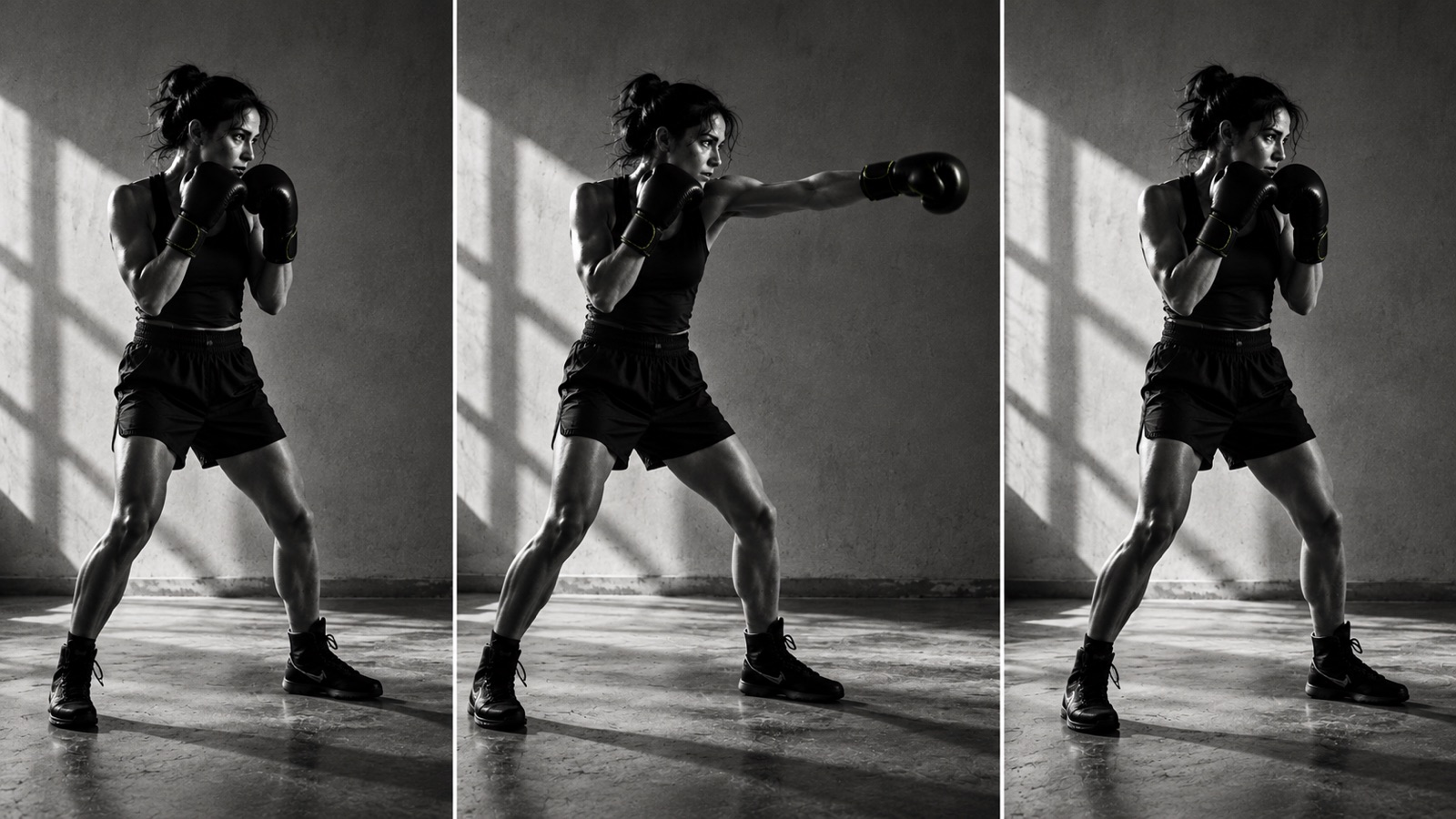
For your own practice, keep the task small: one jab, reset; one rear straight, reset. Notice whether you finish in control or need an unplanned step to recover.
On the rear straight, check the rotation you were taught rather than adding a bigger swing. Fran Sands’ explanation highlights body rotation and the problems of leaning or overcommitting. More effort does not mean more rotation without limit. [3]
If the movement only looks organized when you slow it down, use that version as the starting point for feedback. Do not force the elbow into a hard lock to make a shadow punch feel finished.
Observation three: can you finish the punch?
Do not stop watching when the fist reaches its imaginary target. Look at how it returns and what happens to the other hand.
A punch that travels out confidently but leaves you reorganizing afterward can make the next action feel late. Sands includes returning to guard and keeping the non-punching hand in position in his rear-straight coaching points. [3]
Give yourself a simple assignment: one punch, return, then one deliberate step. If the step becomes a stumble, reduce the pace and show the sequence to your coach. The observation is the finish—not a score for how many punches you can throw.
This is solo technique practice. It is not a test of whether you can defend yourself against another person.
Try a short “one change” practice
Use this as an observation exercise, not a speed-development program.
Start with a few easy single punches. Pick one visible issue, such as pulling the hand back before the jab. Practice the cue your coach gave you, pause, and look again.
When the movement stays controlled, try a few repetitions at a slightly quicker pace. If the original issue returns, go back a step. You do not need to keep increasing speed for the practice to count.
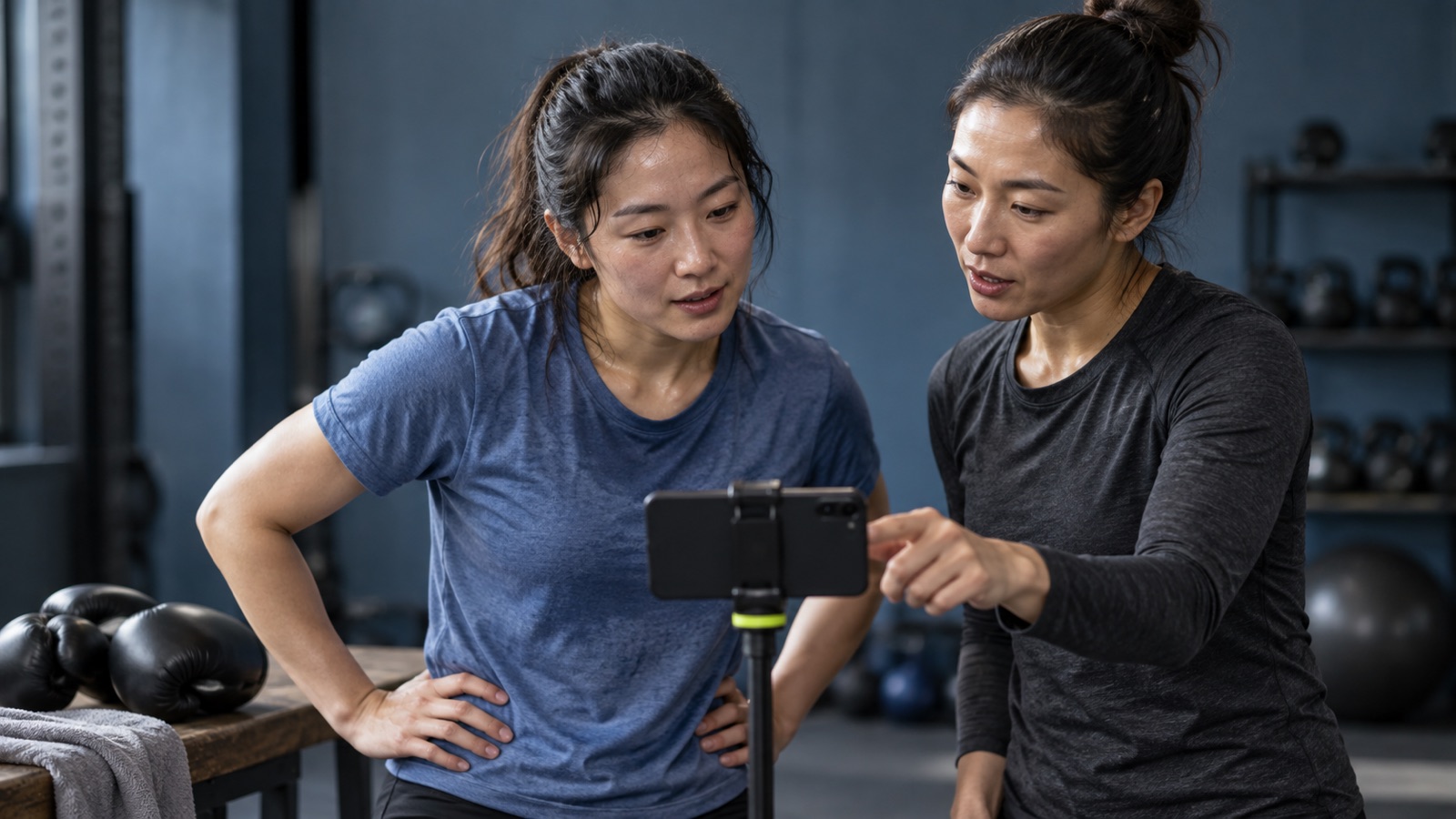
A short video can help show what changed. Keep the camera safely outside your movement space and use the same view for comparisons. Do not twist your neck toward the screen while punching.
Finish with one question to bring to class: “Does this look like the correction you wanted?” The camera records a view; it does not provide a qualified assessment.
What if the jab feels good until it hits pads?
Treat that as a separate question. A punch into empty space and a punch landing on a held target are different tasks. Feeling confident during sparring also does not tell you exactly how much force a pad should register.
Ask the coach or pad holder to check your starting distance, target position, contact, and return. Describe whether the problem is weak impact, an awkward wrist angle, poor timing, or simply a sound you expected and did not hear.
Do not solve a disappointing pad sound by suddenly hitting the holder harder. Agree on the drill first. You are trying to understand the contact, not win a noise competition.
A useful request is: “Can we do a few single jabs and check the range before adding the combination?” That isolates one task without assuming tension is the explanation.
What not to add yet
Skip the urge to add hand weights, complicated combinations, or a hundred extra repetitions as your first response. They add another variable before you know what you are working on.
The goal is not permanent slow-motion boxing. It is a movement you can first recognize, then repeat, then bring up to an appropriate pace with feedback.
For the next session, take one useful finding with you: where the punch becomes awkward, what you changed, and what still needs checking. That is a better starting point than another promise to “just be faster.”
Related questions
Why do I feel stiff when shadowboxing?
Tension or an unfamiliar movement may be involved, but the feeling alone cannot identify the cause. Try a familiar single punch at a controlled pace and notice when the stiffness appears. Use that observation for feedback rather than assuming you need stronger arms. [1]
Should I punch slowly before trying to punch fast?
A controlled pace can make an observation task easier. Use it to understand a cue, then increase pace only while the action stays organized. Slow practice is a tool for this task, not a promise that it automatically produces fast punches.
Does staying relaxed mean punching with a loose fist?
No. Reducing unnecessary tension between actions is not permission to make impact with an unformed hand. Learn hand position, glove fit, and impact mechanics from a coach before bag or pad work. Keep unfamiliar impact practice out of a speed experiment.
Why does my jab feel weak on pads but fine in the air?
The physical target changes the task. Have the coach check distance, target setup, contact, and your expectations before deciding why it feels weak. This is not automatically the same problem as a stiff shadowboxing punch.
Should I hold dumbbells to fix slow punches?
Not as the starting point for this guide. Identify the technical issue with unloaded practice first. A weighted-punching drill introduces a different task; whether it belongs in your training needs separate qualified guidance.
How long will it take for my punches to feel smoother?
There is no reliable deadline from a written description. Compare the same simple action under similar conditions and get feedback on one correction. Feeling smoother is useful feedback, but it is not a measured increase in speed, force, or defensive ability.
Sources and scope
[1] England Boxing — Boxing Coaching Handbook, Part 1 (2022); pages 67, 68, 73.
[2] International Society of Biomechanics in Sports / NMU repository — Amateur Boxing Coaches’ Perceptions of the Technical Components of Straight Punches (2024).
[3] Fran Sands / MyBoxingCoach — The Right Cross – Boxing Heavy Artillery!.
[4] NHS — Shoulder pain.
The examples and reflection prompts in this guide are general suggestions, not an individual assessment. Use qualified instruction for technical corrections and appropriate medical care for symptoms or injuries.