Boxing training app or round timer: which do you need?
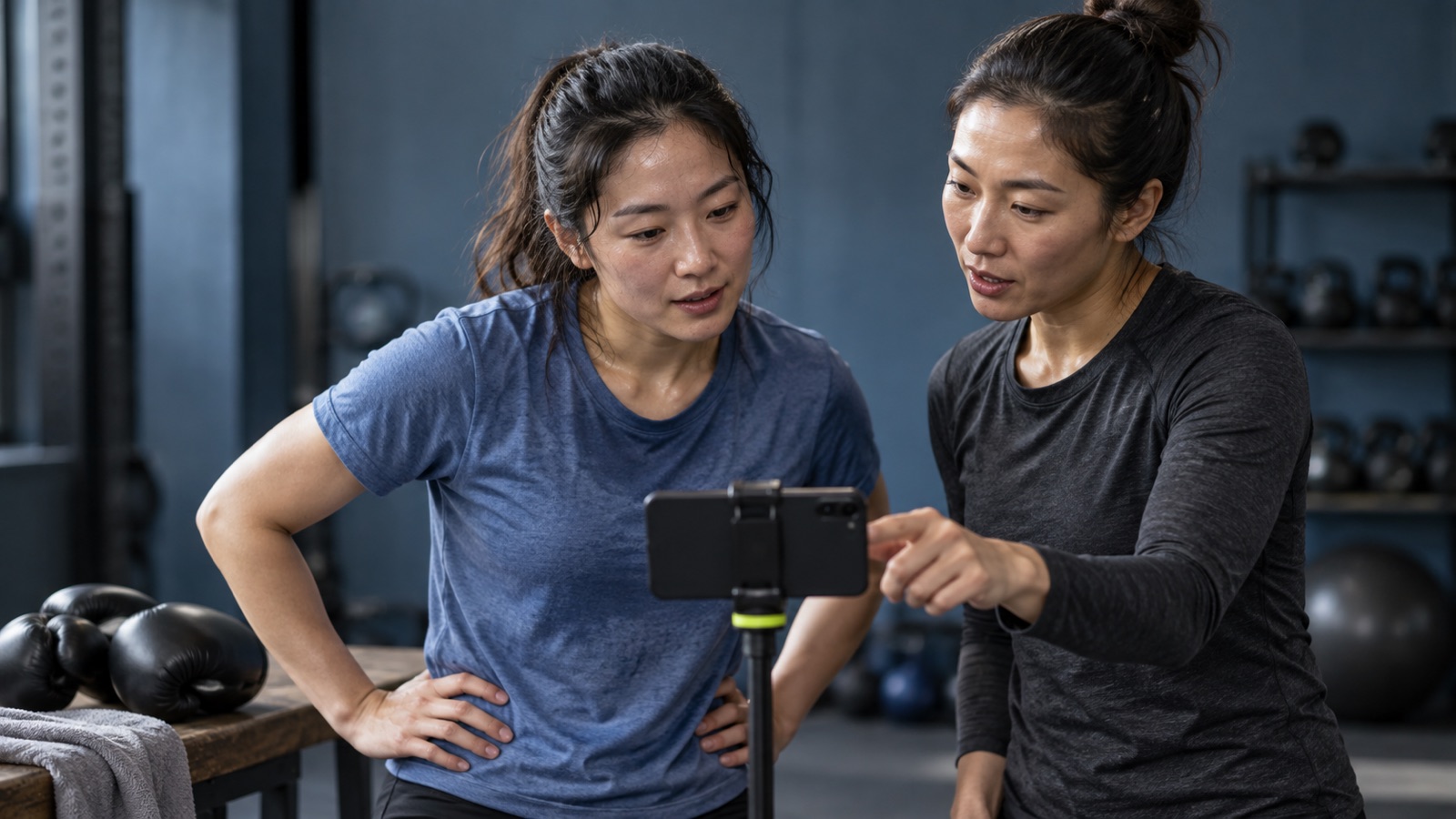
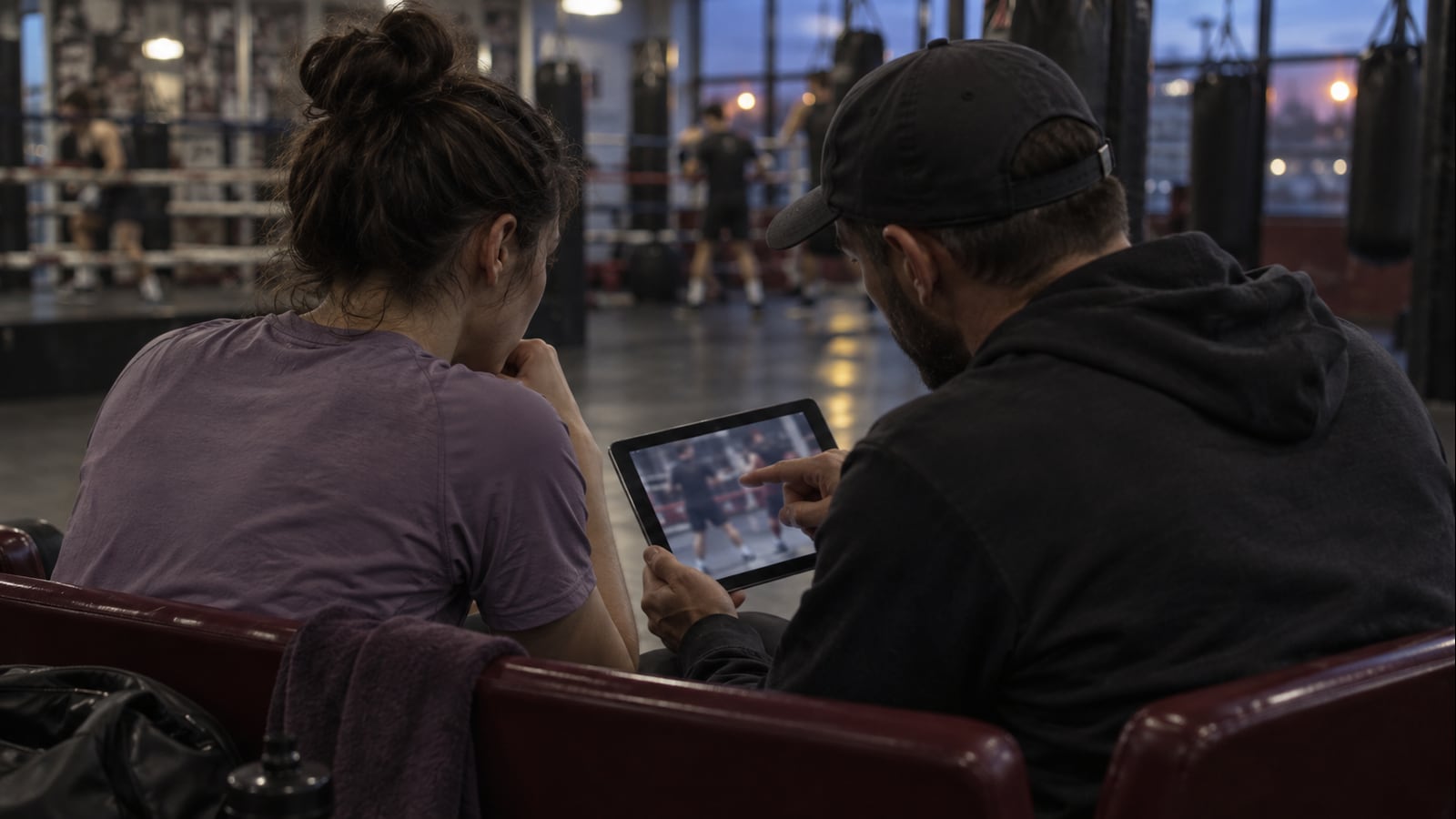
A round timer controls work and rest. A boxing training app can also provide guided sessions, demonstrations, progression, and progress tracking.
6 min read
Learn
Practical guides on technique, training, recovery, and consistency. Start with the basics or choose the problem you want to solve today.
29 practical guides
Stance, guard, equipment, first sessions, and the foundations that make later training easier to understand.
A round timer controls work and rest. A boxing training app can also provide guided sessions, demonstrations, progression, and progress tracking.
6 min read
This session lasts exactly fifteen minutes: a two-minute warm-up, four two-minute rounds, three one-minute rests, and a two-minute cooldown. Judge the workout by balance, hand return, and purposeful movement—not by how exhausted you feel.
5 min read
A beginner combination should solve one simple training problem. It might connect the lead and rear hand, change rhythm, turn a straight line into an angle, or teach you to finish without standing still.
4 min read
A warm-up cannot guarantee that pain or injury will not occur. Keep the movements controlled, adapt them to your body and space, and stop for pain, dizziness, or unusual symptoms.

4 min read
Use a bag designed and installed for striking, clear the area around it, and follow appropriate coaching and hand-protection guidance. Stop if the mount, stand, bag, floor, or your body makes controlled training unsafe.

4 min read
“Quiet” does not mean completely silent on every floor. Your footwear, surface, building, and downstairs neighbours all matter. The goal is to reduce impact and keep every movement compact, controlled, and easy to stop.
4 min read
A strong beginner week can use three short boxing sessions separated by recovery or non-boxing days.
5 min read
Numbering can vary between gyms and coaches. Confirm the convention being used before memorizing combinations. The reference below describes the common lead-and-rear system used throughout this article.
3 min read
The limitation is feedback. No-contact practice cannot show how your technique behaves against resistance, and it cannot reproduce an opponent who moves, decides, and responds.
4 min read
Use one-minute rounds for a narrow technical focus, two-minute rounds for balanced beginner training, and three-minute rounds only when you can maintain pacing and structure.
4 min read
Guard position varies with stance, body, range, and coaching style. Use the cues below as a practical starting point and get personalized feedback when possible.
4 min read
Track six things instead: balance, guard recovery, target consistency, footwork, decision-making, and training consistency. You do not need a fixed mastery timeline; you need evidence that familiar tasks are becoming more controlled.
4 min read
You do not need to look fast or invent a realistic fight in your head. Your job is to make simple decisions while staying balanced: identify where the opponent is, choose one action, finish in an organized position, then begin again.
4 min read
Keep the learning order narrow: stance and guard, controlled movement, the jab, then the cross. Short technical rounds are more useful than trying to copy advanced combinations at full speed before you can finish each action in balance.
5 min read
A beginner should try both at low speed, compare balance, movement, lead-hand control, rear-hand coordination, and recovery, then use a qualified coach’s feedback before making frequent stance changes.
3 min read
The choice is not permanent and one method is not universally better. They train overlapping skills in different ways, and both still leave important work for qualified coaching and supervised partner practice.
4 min read
Add equipment in stages. Buy or borrow an item only when you can name the training problem it solves and can use it safely.
4 min read
The safest way to remove uncertainty is to contact the gym before class and ask what the beginner session includes, what equipment is provided, and whether any partner or contact work is expected.
4 min read
Short workouts, weekly schedules, warm-ups, round lengths, and practical ways to organize beginner training.
There is no single weekly frequency that fits everyone. Count the demand of the whole week—not only the number of boxing days—and choose a schedule that lets you return with attention, energy, and technically controlled movement.
4 min read
Breathing problems during training are often connected to tension and pacing. Slow the actions, relax between exchanges, and make the reset part of the round rather than punching continuously.
4 min read
A missed week can feel larger than it is. The mind turns a few skipped sessions into a story: fitness is gone, technique is lost, and the next workout must repay the debt.
3 min read
Mechanics, punch numbers, simple combinations, and cues that help every action finish under control.
Exact mechanics vary with stance, body, range, and coaching system. Practise slowly and use qualified feedback rather than forcing one universal shape.
4 min read
The jab may be the first punch you learn, but it never becomes a beginner-only punch. It can measure distance, interrupt an opponent, hide your next attack, create an exit, and give you a safe way to restart when a round becomes chaotic.
3 min read
Practical guides for balance, exits, reactions, guard recovery, and staying organized after every exchange.
Getting touched cleanly can create an instant emotional reaction: rush forward, throw everything, or retreat without looking. That reaction is understandable, but it often gives the opponent a second opening.
3 min read
Good footwork is not about bouncing constantly or covering the floor with dramatic movement. It is the ability to arrive in a useful position while keeping enough balance to punch, defend, or change direction again.
3 min read
Fast reactions in boxing are not only about moving your hands sooner. They begin with noticing useful information early, choosing a simple response, and repeating that response until it feels familiar.
3 min read
The gloves are dangerous, so beginners naturally stare at them. The problem is that a glove often moves only after the rest of the body has already started the punch. By the time your eyes chase the hand, the useful warning may be gone.
3 min read
Breathing, recovery, motivation, improvement signals, and sustainable ways to keep returning to practice.
Motivation is useful, but it is unreliable. Some days the workout starts before you have time to negotiate with yourself. Other days even putting on wraps feels like a major project.
3 min read
The rest between rounds is short, but it is not empty time. Used well, it can reduce unnecessary tension, organize your breathing, and turn a noisy round into one clear plan for the next bell.
3 min read