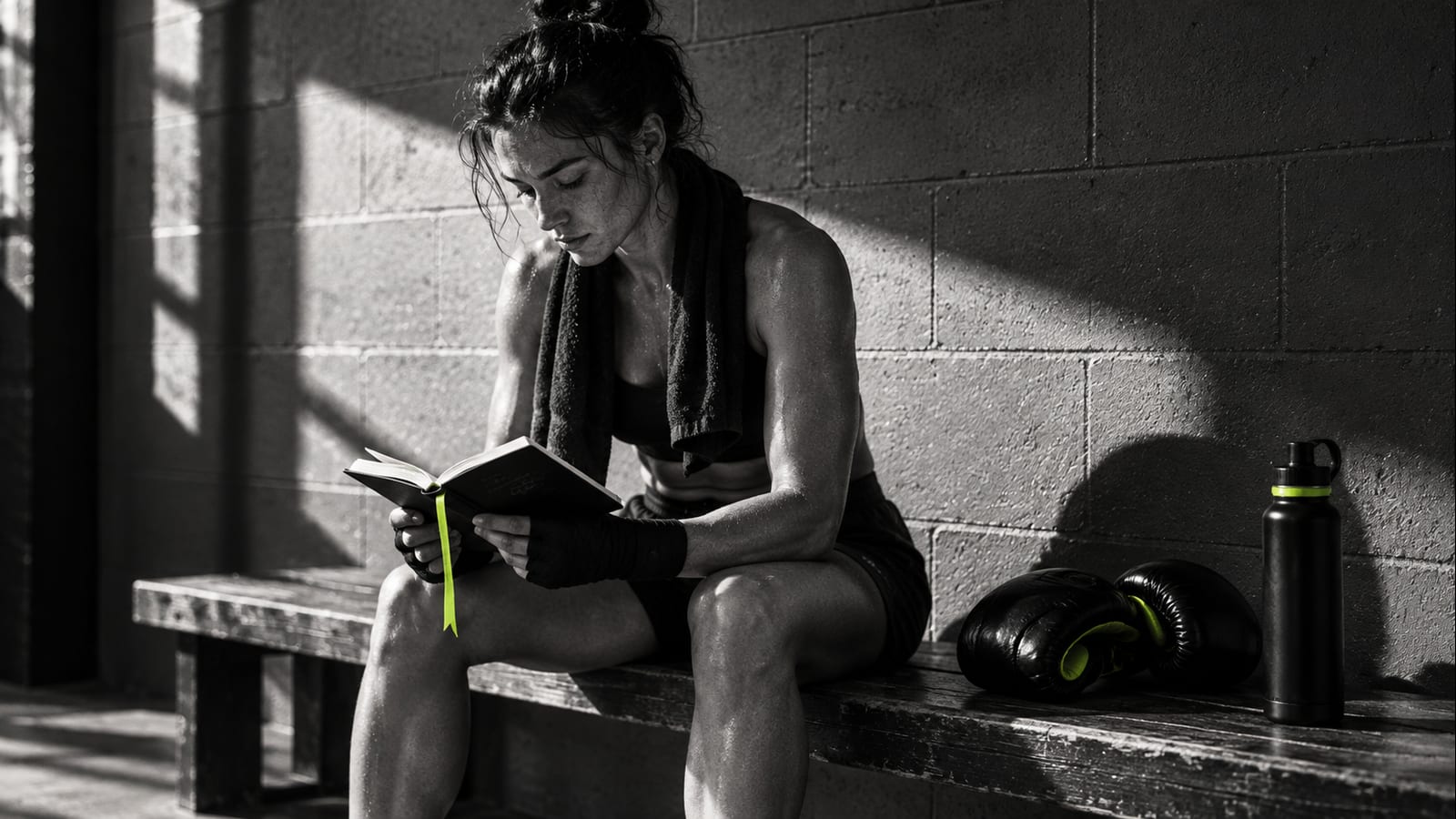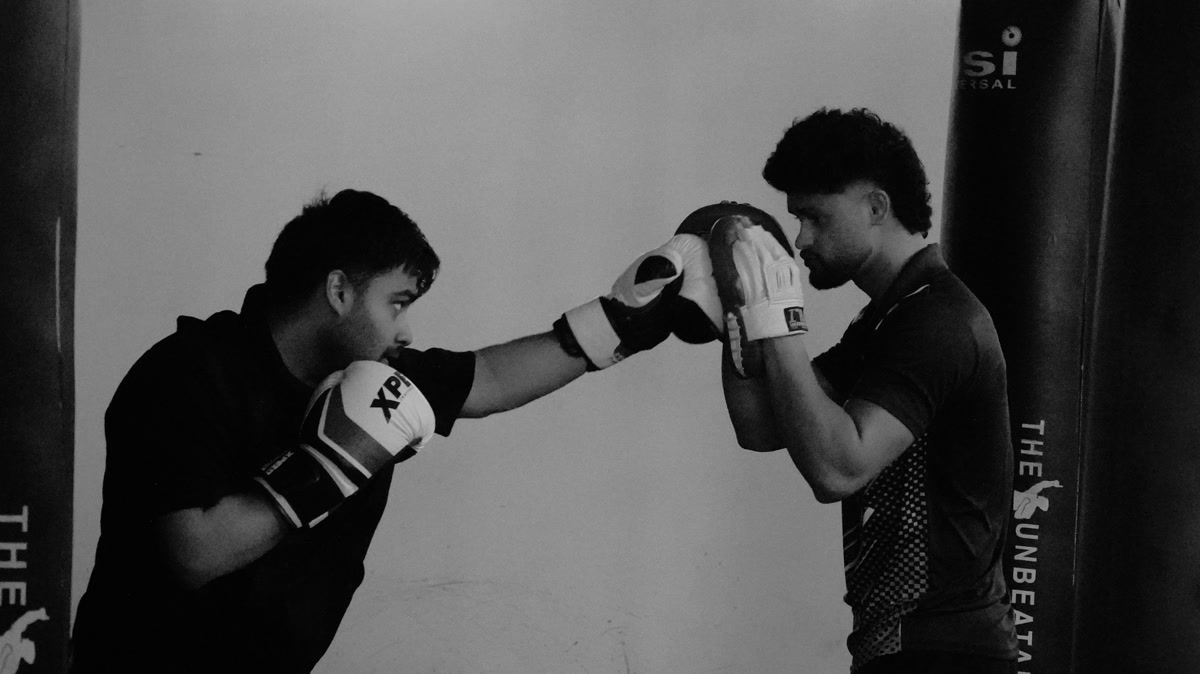
Use solo work to build foundations; use qualified coaching and supervised training for contact and live decisions.
What you can genuinely improve without contact
Starting and finishing in balance. You can practise moving, punching, and stopping without crossing the feet, leaning beyond your base, or needing several recovery steps.
Guard responsibility. Slow no-contact work lets you notice whether the non-punching hand remains useful and whether each punch returns before the next action begins.
Footwork and positioning. A clear floor is enough for short forward, backward, and lateral steps, small direction changes, and deliberate exits after an exchange.
Coordination and rhythm. You can connect simple punches, change timing, breathe during the action, and repeat the same sequence without rushing.
Training consistency. Short structured rounds remove the need for a permanent installation and make it easier to practise regularly in the space you already have.
Use a no-bag capability check
Use these checks to decide whether no-contact practice is still giving you useful work. They are not a grading system and do not replace a coach.
Movement: take one controlled step in each direction and stop in a stance from which you can move again.
Single punch: throw a slow jab and return the hand without pulling the head or chest forward.
Short exchange: throw a controlled jab-cross, bring both hands home, then reset or take one small exit.
Attention: keep the eyes forward, release unnecessary tension, and continue breathing rather than holding your breath through the exchange.
Repeatability: keep one chosen cue for a short round instead of changing the drill every few seconds.
When one check breaks down, you already have a useful next session: reduce the speed, narrow the action set, and practise that one problem. A heavy bag is not required to make those corrections visible.
What no-contact practice cannot verify
Solo practice cannot tell you whether a punch that looks organized will remain organized on contact. It does not provide resistance, a physical target, or reliable feedback about how your distance and hand position behave when something is actually struck.
It also cannot correct details you do not recognize. Video can help you compare one visible cue, but it is not personalized coaching and it may miss posture, alignment, timing, or defensive problems outside the camera angle.
Most importantly, no-contact rounds do not recreate another person’s timing, reactions, pressure, or safety responsibilities. Partner drills, pads, contact work, and sparring belong in an appropriate environment with qualified supervision.
Add a bag only when it solves one defined problem
A heavy bag becomes relevant when you can name the missing training input—for example, a physical target for controlled distance practice, carefully introduced contact, or bag-specific rounds. “I feel like every boxer should own one” is not a training purpose.
Before buying or installing one, confirm all of the following: the support and bag are designed for striking; the full swing area is clear; the floor and surrounding space are suitable; you have appropriate hand protection that you know how to use; and you can get qualified help with setup, fit, and striking mechanics.
A bag will not automatically fix falling forward, leaving the hands out, standing still, or training without a plan. Those problems can become harder to notice when impact and noise make a punch feel successful.
Keep no-bag training truly no-contact
When suitable equipment, protection, installation, or instruction is unavailable, continue shadowboxing and footwork rather than creating contact for its own sake. Stop for pain, dizziness, unusual symptoms, or any condition that makes controlled movement unsafe.
Use structure before adding equipment
Choose one skill for the session, one observable cue, and a small action set. A movement session can track uncrossed feet; a jab session can track the hand returning; a straight-punch session can track balance after the cross. That structure is more useful than filling every round with new techniques.
Knockout can organize no-equipment beginner sessions, show short technique demonstrations, and guide work and rest rounds. Use that guidance for consistent repetition, while keeping personalized correction, contact work, and live partner decisions with a qualified coach.