Used poorly, the minute disappears into heavy panting, scattered thoughts, and five different instructions. Recovery is a skill. Like footwork or the jab, it improves when you give it a repeatable structure.
Control the exhale first
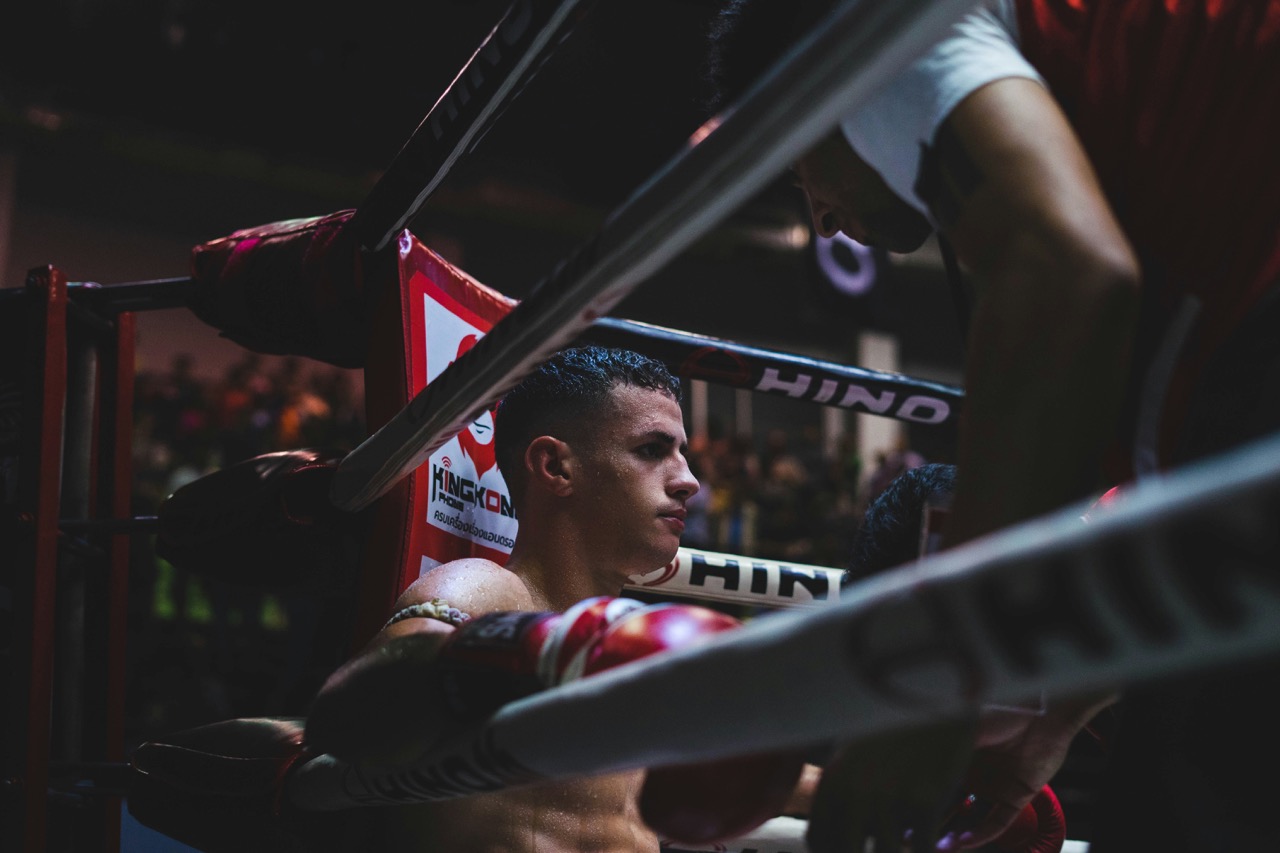
When the bell ends, stop adding effort. Settle into the corner or rest position your coach uses, open the posture, and let the first few breaths come out fully. A controlled exhale can help you stop holding your breath and makes the next inhale feel less rushed.
Do not chase one perfect breathing count while you are working hard. Use a simple pattern you can repeat: breathe in comfortably, then let the exhale last a little longer. Keep the jaw loose and avoid lifting the shoulders toward the ears with every breath.
Remove tension that does no work
Scan the hands, forearms, shoulders, and face. Many boxers squeeze the gloves and clench the jaw long after the exchange has ended. Release what you can. Relaxation does not mean collapsing; it means saving effort for actions that matter.
Let the legs settle too. If you are standing, avoid bouncing through the entire break. If you are seated, keep a posture that allows full breathing and makes it easy to rise without a scramble.
Take one instruction
A tired brain does not need a lecture. Reduce the next round to one main cue and, at most, one supporting cue. Examples: “jab before entering,” “exit to the left,” or “hands home after the cross.” The cue should describe an action you can recognize and repeat.
Say it back in a few words. That small confirmation makes the plan active instead of letting it become background noise.
Review without replaying everything
Use the break to identify one pattern, not to relive every exchange. Ask a compact question: What kept happening? Perhaps the jab landed when you entered without one of your own, or the exit disappeared after the right hand. Turn the answer into the next cue.
Avoid scoring the round in your head while it is still happening. Whether you believe you won or lost the last minute does not change the useful task in front of you. Recover, adjust one behavior, and return to work.
Stand up with the first ten seconds planned
Before the bell, know your opening action. It may be a high guard and two calm steps, a firm jab, or a deliberate move back to the center. The plan prevents the first seconds from becoming an emotional sprint.
Start composed rather than trying to prove that you are not tired. Efficient movement often looks quieter: balanced feet, clear eyes, and punches that return to guard.
Practice the minute, not only the round
During bag or shadowboxing sessions, keep the full scheduled rest instead of scrolling or walking away. Use the same sequence every time: exhale, release tension, take one cue, plan the opening. Ask a coach or training partner to give only one instruction.
The rest minute will not erase fatigue. It can stop fatigue from controlling every decision. Recover the body, simplify the mind, and meet the next bell with a plan. Repeating the same routine also gives you a stable reference: when recovery suddenly feels very different, you notice it sooner and can adjust the next round responsibly.