You remember your stance. You remember your hands. Then you throw a combination and realize you have forgotten the one thing you were doing perfectly well before you started: breathing.
Use a brief, comfortable exhale as you punch, and let yourself breathe naturally between actions. Do not hold your breath through the whole combination, and do not try to empty your lungs on every shot. The sound is a cue—not the goal. [1]
Start with one punch, not a complicated breathing pattern
Practice this without contact first. Set your stance, take a normal breath, throw one easy jab while letting out a small breath, then return to guard. Pause long enough to breathe comfortably before repeating.
You are not trying to match your lungs to a stopwatch. You are learning to let the punch happen without closing off your breathing.
Keep the punch slow enough that you can notice what you do. Once a single jab feels straightforward, try a jab-cross. Use small exhalations rather than one enormous breath that has to last the entire sequence.
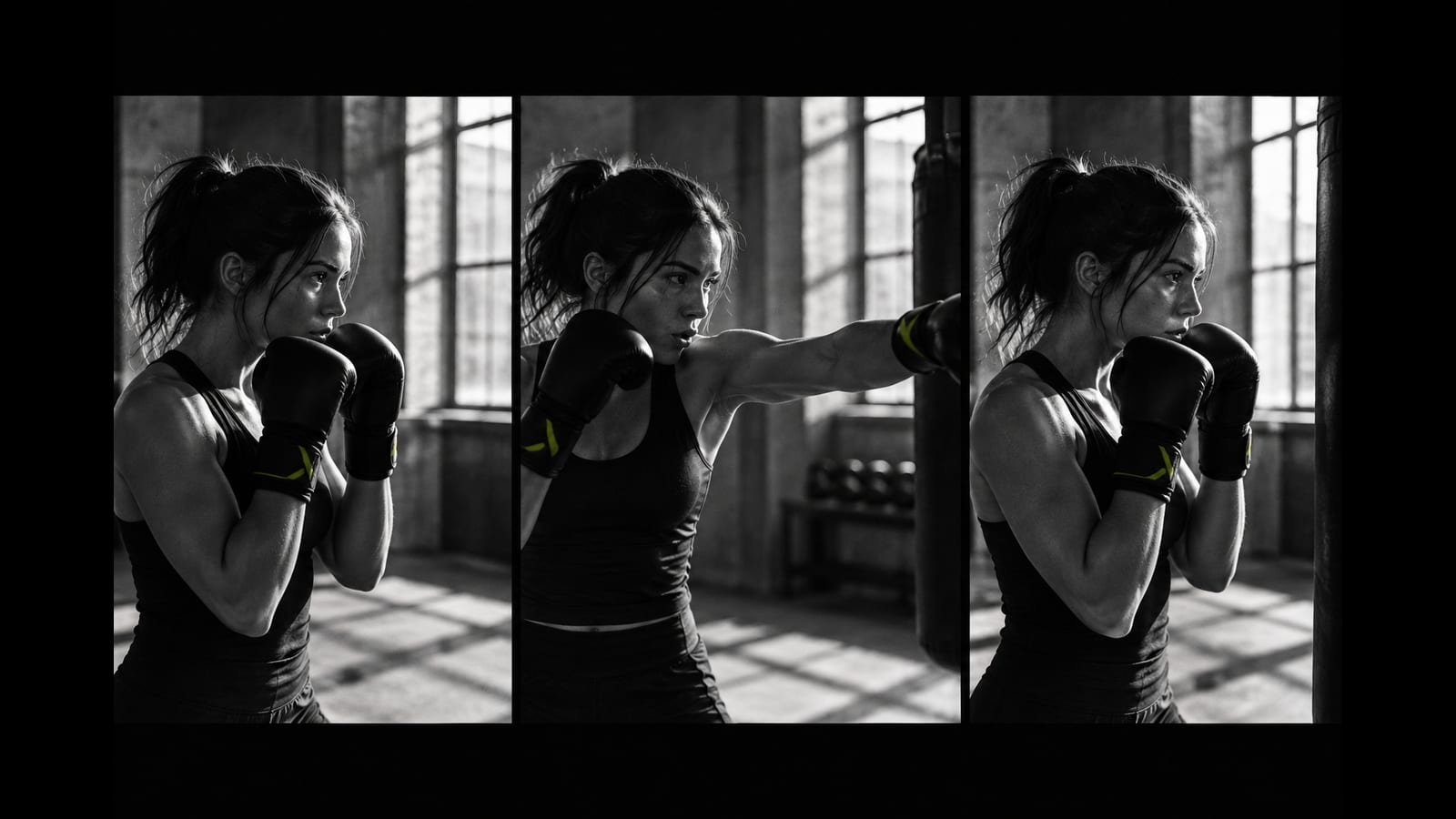
Do you need to make the “eesh” sound?
No particular syllable is required for this drill. A quiet “shh” can make the exhale easier to notice, but copying another boxer’s noise is not the same as learning their technique.
If you already breathe out with your punches, ask your coach what they want the sound to help you do. Is it a cue to stop holding your breath? To find a rhythm? Understanding the reason is more useful than trying to sound convincing.
Fran Sands’ breathing guidance describes different punching sounds and cautions against excessive breathing during fast combinations. [1] Loudness is not a score.
A three-stage practice you can try today
Warm up, then practice these stages gently in a clear space. There is no bag and no partner. Move on only when the previous stage feels comfortable.
Stage 1: five separate jabs. Throw one easy jab with a small exhale. Return the hand and take whatever comfortable breaths you need before the next repetition. Do not speed up to finish the set.
Stage 2: five jab-cross combinations. Let out a small breath with each punch, then pause and breathe normally. Shorten the combination back to a single jab if you find yourself holding your breath or forcing the rhythm.
Stage 3: one gentle practice round. Try 30 to 60 seconds of easy movement and occasional single punches or jab-cross combinations. Keep enough space between actions to breathe comfortably. Stop rather than push through dizziness or unusual breathlessness.
The small number of repetitions is deliberate: this is a coordination exercise, not a challenge to see how little air you can use.
What changes when the combination gets faster?
A fast combination does not leave space for a giant inhale between every punch. Keep the exhalations small and avoid exaggerating them. Start with shorter combinations so your breathing can settle between actions.
If speed makes the rhythm fall apart, reduce the speed. If five punches make you hold your breath, use two. You can build complexity later.
The combination should fit your current control—not force you to fight your own breathing. Have a coach check the movement and breathing together before adding more intensity.
Remember the spaces between punches
An exhale is only part of breathing. After the punches, let air come back in naturally. Do not keep making little outward noises while forgetting to inhale.
In no-contact practice, slow the work or pause to find a comfortable rhythm again. Avoid turning this into a nasal-only restriction or a fixed breath count you must obey.
In coached boxing, practice with the equipment and mouthguard you will actually use, following your coach’s guidance. Do not introduce unfamiliar breathing experiments in sparring.
Between rounds, make room for recovery
When the round ends, stop the punching. Let your breathing settle and avoid adding another exercise just to fill the break.
Do not take a series of rapid, maximal breaths, hold your breath, or chase a promise of “instant recovery.” During your own practice, a longer rest is allowed. If the next round begins before you are ready, pause the session.
For an actual sparring session, tell the coach when you are not recovering or cannot defend yourself properly. Breathing cues are not a reason to keep going.
One thing to remember next time
For your next easy round, pick one cue: exhale with the action, breathe between actions. Leave the perfect sound, the long combinations, and the complicated counting for another day.
When you use a guided session in Knockout, keep the movements at a pace you can control. It is fine to pause the practice and repeat a simple action before following the next one.
Related questions
Should I inhale or exhale when punching?
A brief exhale with the punch is a common coaching cue. Allow yourself to inhale naturally between actions. Do not try to make every punch use a full breath or keep punching while deliberately holding your breath. [1]
How do I stop holding my breath during boxing combinations?
Reduce the combination to one slow punch, then two. Add a comfortable pause between repetitions. Build back up only when breathing and punching work together without forcing either. A coach can help you check the pattern.
Can I breathe out quietly when I box?
Yes, for this practice you do not need to produce a loud sound. A soft audible exhale may help you notice the habit. The useful question is whether you are breathing comfortably, not whether you sound like a particular fighter.
Should I breathe through my nose or mouth while boxing?
Do not turn a beginner drill into a rule that you must breathe through only one route. Prioritize comfortable breathing and avoid holding your breath to meet a rule. Ask your coach to help you practice with your usual equipment and mouthguard.
Will better breathing fix my boxing stamina?
It may help you stop interrupting your breathing, but it does not replace conditioning, pacing, technique, and recovery. It also cannot explain or treat a medical cause of breathlessness. Consider the whole training picture rather than looking for one breathing trick.
What breathing exercise should I do between rounds?
You do not need a complicated exercise. Stop the work, take comfortable breaths, and give yourself enough rest. Avoid forced rapid breathing or breath holds. In solo training, extend the break when needed; in sparring, tell your coach that you are not ready.
Sources and practice notes
[1] Fran Sands, MyBoxingCoach, “Boxing Tips in 90 Seconds(ish) – How to Breathe???” [2] NHS, “Shortness of breath.”
The three-stage practice is an original, low-intensity coordination example. It is not respiratory therapy or a promise of improved endurance.