The timer starts. You throw a jab, a cross, another jab—and then wonder what you’re supposed to do for the rest of the round.
Start by giving each round one job. Practice your stance and steps, then your jab, then a short combination, then moving after you punch. You do not need to invent a whole fight or use every punch you know.
You are rehearsing, not performing
Shadowboxing means practicing boxing movements without hitting a bag or another person. That leaves you free to pay attention to something specific: where your feet finish, whether your other hand stays up, or how you move after a combination.
A round can be useful even when it looks simple. England Boxing recommends giving shadowboxing rounds a theme and keeping beginner rounds short enough to preserve technique. [1] Think of the plan below as a starting point, not a fitness test.
Get ready before you press start
Clear a non-slip space where you can extend both arms and take a small step in each direction. Put your phone somewhere stable, outside your movement area. Spend a few minutes warming up with easy movement and comfortable shoulder and arm motions.
Use the stance you have been taught. Your lead hand and foot are the ones in front; your rear hand and foot are behind. Orthodox usually means left side forward; southpaw means right side forward.
A jab is the straight punch from your lead hand. A cross is the straight punch from your rear hand. Keep your knees comfortably soft, your eyes ahead, and your hands in guard. If those movements are brand new, get a demonstration and practice them slowly before combining them.
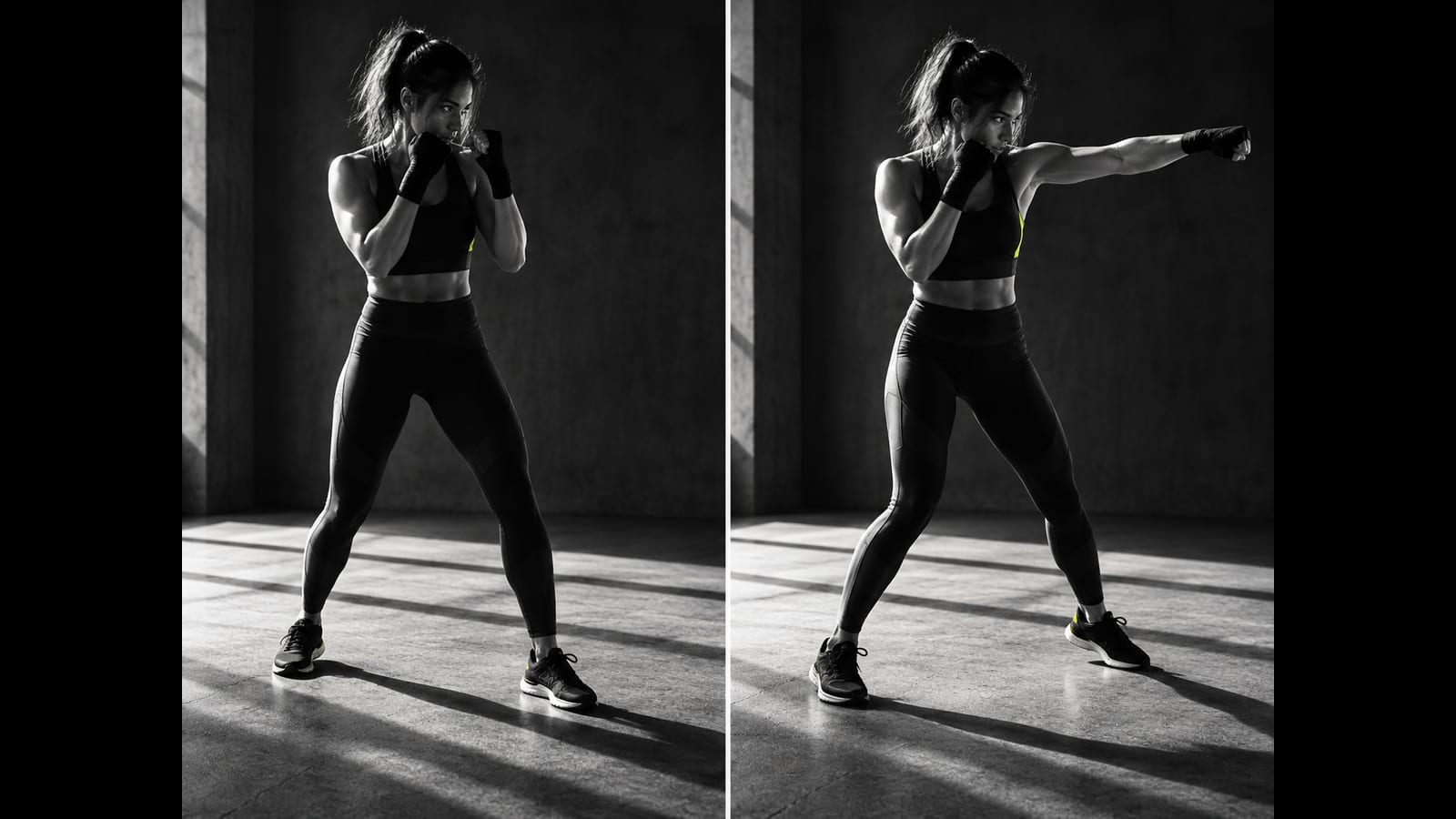
Round 1: Move your stance, not just your feet
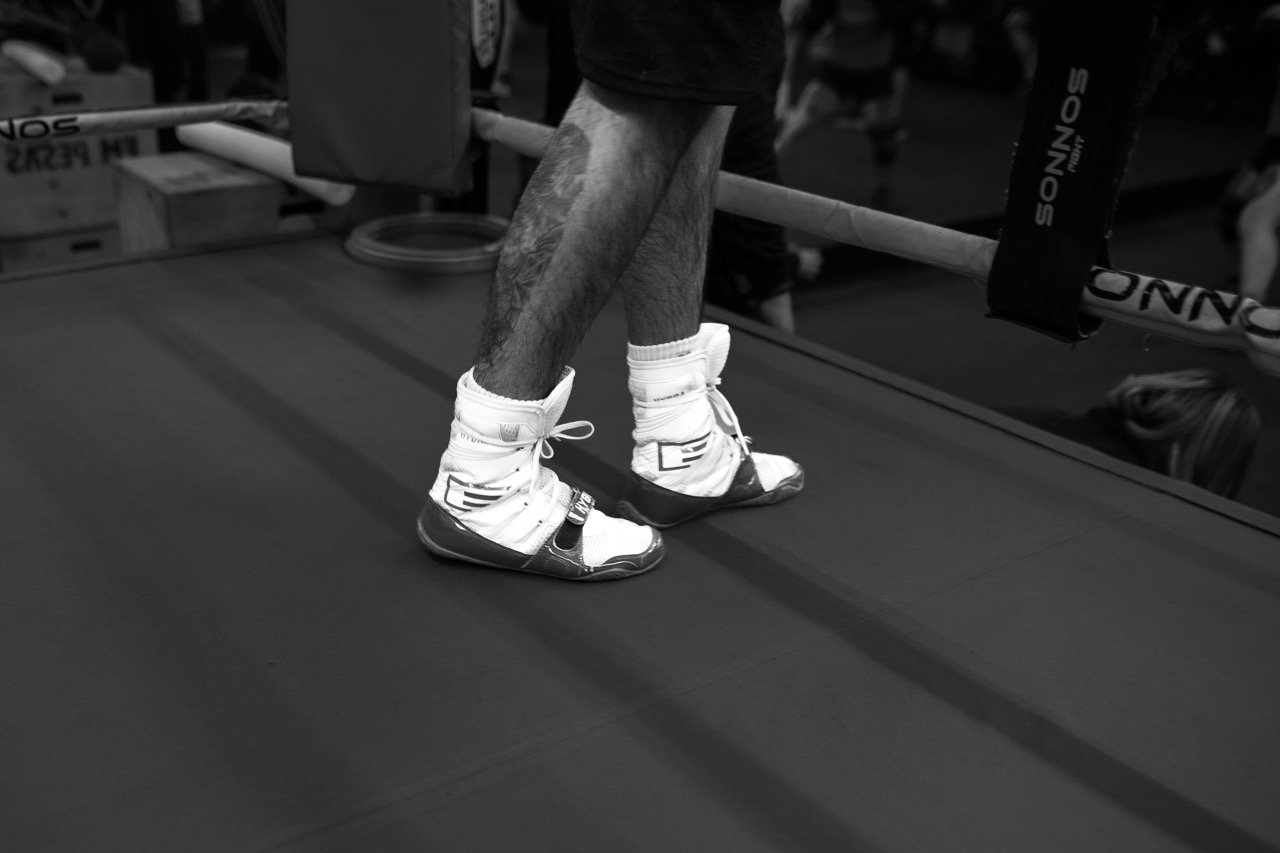
Keep your hands up and leave punches out for now. Take one small step forward and return to your starting position. Then try a small step to each side.
Let the foot nearest the direction of travel move first, with the other following promptly. Keep the feet separated rather than crossing them or clicking them together. Treat the two feet as a linked movement, not a long lunge followed by a late catch-up.
Your checkpoint: after each movement, can you pause comfortably in your stance? If you need an extra step to stop yourself falling, make the movement smaller.
Round 2: Throw the jab—and bring it home
From a comfortable stance, send your lead hand straight out and return it to guard. Keep your rear hand near your face. Use controlled reach rather than throwing your elbow into a hard lock.
Pause, reset, and repeat. Add a small step between repetitions when it feels manageable. Let out a brief, comfortable breath with the punch, then breathe normally while you reset. [2]
Your checkpoint: did your punching hand come back to the same place? The return is part of the repetition, not the bit after it.
Round 3: Put two punches together
Throw a jab followed by a cross. Let your hips and shoulders turn with the rear-hand punch rather than reaching with your arm alone, then bring both hands back to guard.
Start with one combination at a time. Reset your stance before the next one. There is no prize for fitting ten punches into a combination you cannot control.
Your checkpoint: are you balanced after the cross, with your eyes still ahead? If not, shorten the reach and reduce your speed. Repeat the jab-only round until you can add the cross without losing your position.
Round 4: Give the combination an ending
Throw your jab-cross, return your hands to guard, then take one small step back. Restore your stance before starting again. Once that feels clear, alternate the step back with a small step to the side.
Now you have a simple sequence: punch, return, move, reset. You are practicing what happens after the punches instead of standing still to admire them.
Your checkpoint: can you finish the sequence without crossing your feet or letting your hands drift down? Stay at a speed where the answer is yes.
What if you cannot picture an opponent?
Do not force yourself to imagine a realistic opponent doing ten different things. Give the imagined situation one detail: after your jab-cross, the other person comes forward. Your job is to take your practiced step back.
That is enough of a story for this session. Later, a coach can help you add specific responses and defensive movements. Do not rehearse slips and rolls at random just because they look impressive.
Make the next session better, not just longer
After your last round, move gently, let your breathing settle, and write down one thing you noticed. “My rear hand dropped during the jab” is more useful than “I looked terrible.”
Repeat the same session and focus on that one detail. You can record a short clip with your whole body in frame and ask a coach for one correction. A recording helps you see yourself; it does not turn you into an expert judge of your own technique.
When the sequence feels comfortable and controlled, change one thing: a slightly longer round, a different step after the combination, or a technique your coach has introduced. You do not have to increase everything at once.
Related questions
What should a beginner do in the first shadowboxing round?
Start with your stance, guard, and small steps. Leaving punches out briefly gives you space to notice your balance. Then add one punch you have learned rather than trying to improvise a full combination immediately.
How long should I shadowbox as a beginner?
For this practice session, try two to four one-minute rounds with a minute of rest between them. That is a starting suggestion, not a required dose. Shorten the rounds or stop when you cannot keep the movements controlled.
Can I shadowbox without gloves or a punching bag?
Yes. This is no-contact practice, so a bag is not required and you can practice without gloves. Keep your hands empty for this beginner routine; adding dumbbells is a different training choice, not a necessary upgrade.
Is it okay to repeat the same combination?
Yes—give the repetition something to improve. Repeat a jab-cross while checking your guard return, balance, or exit step. Repeating without paying attention is different from deliberately practicing one part of the movement.
When should I add defense to shadowboxing?
Add defensive movements once you understand how to perform them. Begin with one response your coach has taught you. For the routine above, returning your hands and stepping away is enough; you do not need to add unfamiliar head movement.
Can shadowboxing teach me to fight on its own?
It can give you a way to practice movements, but it does not provide an opponent’s timing, distance changes, or feedback on your errors. Treat it as part of learning boxing, not proof that you are ready to spar or fight.
Sources and practice notes
[1] England Boxing, Boxing Coaching Handbook, Part 1, “Shadow Boxing,” pages 94–95. [2] Fran Sands, MyBoxingCoach, “Boxing Tips in 90 Seconds(ish) – How to Breathe???”
The four-round sequence and suggested timings are an original practice example. They are not an official federation program or a substitute for individual coaching.