You hit the bag hard. It swings. You chase it, throw a few more punches, and finish the round exhausted. But what did you actually practice?
Give each round a skill goal before you start. Use the bag to work on distance, a familiar combination, and what you do after punching. Getting tired can happen along the way; it does not need to be the entire plan.
Before the first punch
Use this routine after you have learned basic straight punches and had your stance, fist, and wrist position checked by a qualified coach. England Boxing advises establishing the fundamentals before using a bag and giving bag rounds a clear purpose. [1]
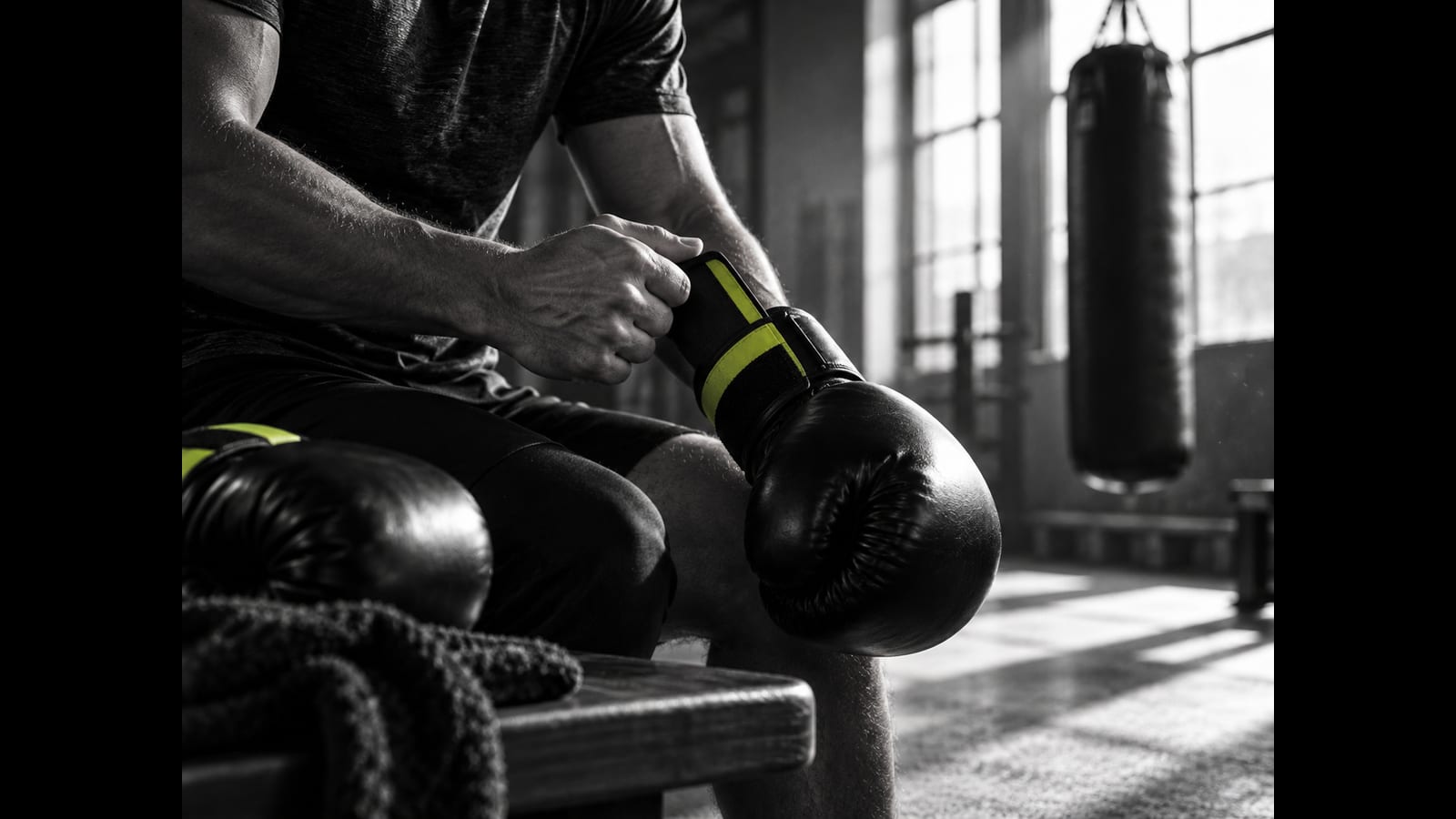
Wear suitable boxing gloves and properly fitted hand wraps, and have a coach show you how to use them. Check that the bag and its mounting are secure, the floor is non-slip, and nobody can walk into your punching or movement space.
Warm up gradually, then rehearse the punches in the air before making light contact. Keep the wrist aligned with your forearm rather than folding it as you land. Equipment is not permission to punch through pain.
Keep the first session controlled
Try four one-minute rounds with one minute of rest between rounds. That is seven minutes before adding your warm-up and cool-down. Start with fewer rounds, shorten them, or take longer rests when needed.
Keep contact controlled enough to notice your position after each punch. This is not a maximum-power workout or a test of how many punches you can squeeze into a minute.
A jab is the straight punch from your lead hand; a cross is the straight punch from your rear hand. Use only punches you have already learned.
Round 1: Find your distance with the jab
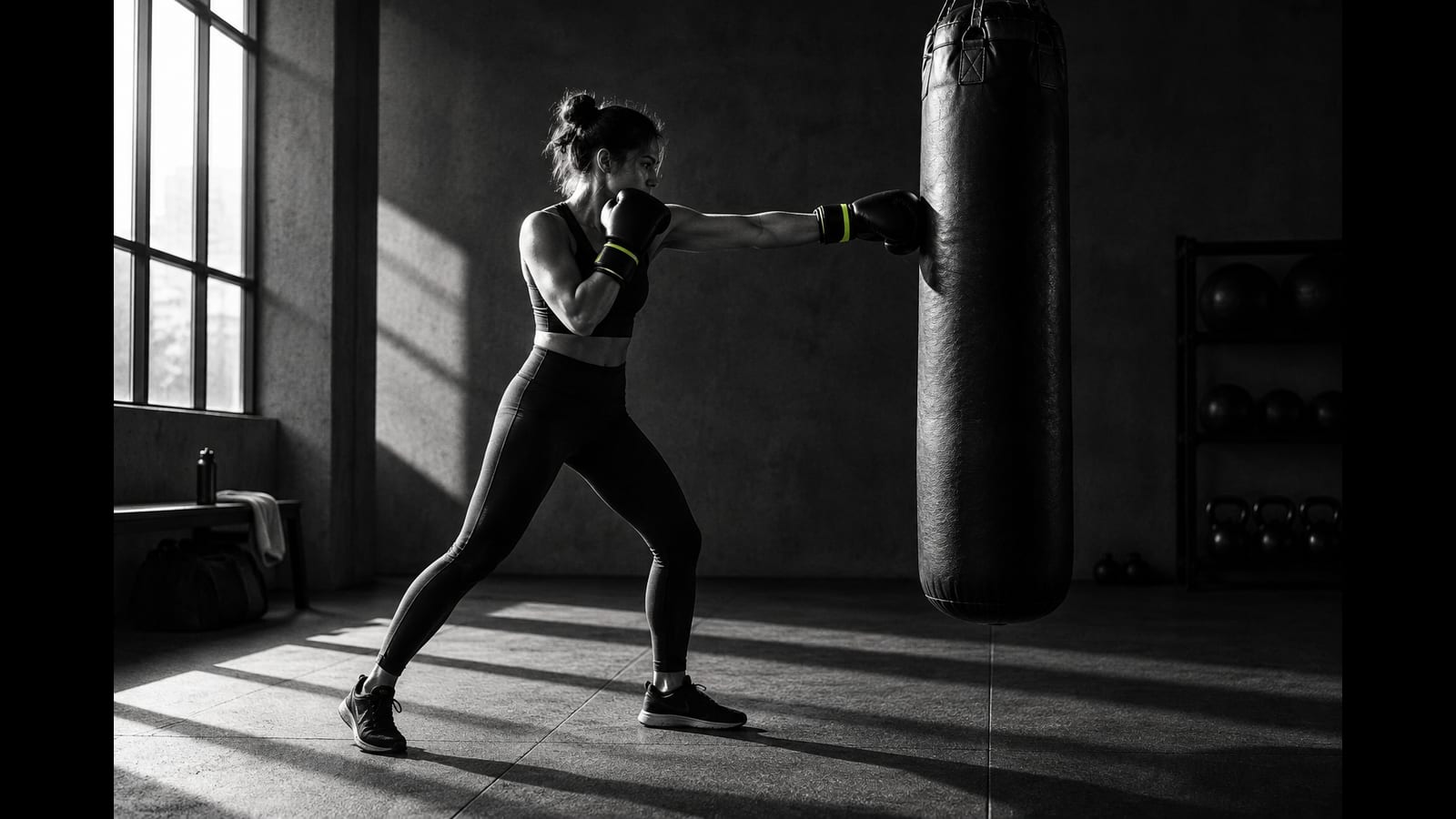
Start in your stance and throw one easy jab. Bring the hand back to guard and pause. Did you reach the bag without leaning far forward? Did you keep space for the punch rather than crowding yourself against it?
Adjust your feet, not just your reach. If you are too far away, move into a better position before punching. If you are too close, step back and reset. [2]
Your checkpoint: you can finish the jab in a balanced position without falling into the bag. A single well-placed punch is enough for each repetition.
Round 2: Make the jab-cross feel like two clean punches
Throw a jab followed by a cross, return your hands, and reset. Use the rotation you have been taught for the rear-hand punch rather than reaching with your arm alone.
Keep the non-punching hand in guard. Let out a short, comfortable breath with each punch instead of holding your breath through the combination. [3]
Your checkpoint: the second punch does not pull you out of your stance. When it does, reduce the speed and contact, or return to single punches.
Round 3: Punch, then change position
Throw your familiar jab-cross, bring your hands back, and take one small step back or sideways. Restore your stance before starting again.
Keep enough room around the bag to move safely. This is not an instruction to circle constantly or copy a dramatic exit you have not learned.
Your checkpoint: the combination has an ending. You finish with your guard and balance instead of staying close to the bag with your hands down.
Round 4: Repeat it without rushing
Use the same sequence: jab-cross, return, small step, reset. Keep the actions recognizable all the way through the round.
When the bag swings beyond your comfortable range, let it settle rather than chasing it with reaching punches. Do not put fingers near moving chains or try to catch a heavily swinging bag.
Your checkpoint: the final repetitions still look like the first ones. When fatigue starts changing the movement, reduce the work or stop. You do not owe the timer a frantic finish.
Three habits that make the bag less useful
Using the swing as a score. A dramatic swing does not tell you whether your stance, guard, or distance was good. Judge the skill you chose, not how far the bag traveled.
Adding punches whenever you feel unsure. Longer combinations can hide the same mistake repeated several times. Return to a single jab or jab-cross and check one detail.
Treating every round as a power round. A heavy bag can be used for different purposes. This session is about controlled practice. Let your coach help you choose when harder contact belongs in your training. [1][2]
Take one useful question back to class
After cooling down, note the moment that felt unclear. “I lose my stance when I throw the cross” gives you a specific problem to investigate.
Record a short clip with your whole body and the bag visible when it is safe to set up a camera. Ask your coach to check the same detail you were practicing, not simply rate how powerful you look.
The bag gives you a target. It does not choose distance, throw a counter, or tell you when your technique is safe. Bag practice and coached partner work are different tasks.
Related questions
Do I need hand wraps and gloves for a heavy bag?
For this beginner routine, use suitable gloves and correctly fitted wraps, with a coach showing you how to use them. Do not use bare-knuckle punching as a shortcut to tougher hands. Protection does not make poor wrist position or painful contact safe.
How hard should a beginner hit the heavy bag?
Start with light, controlled contact. You should be able to notice your guard, wrist position, and balance rather than simply survive the impact. There is no useful universal percentage for every beginner, glove, or bag; increase contact only with sound technique and appropriate coaching.
Is it bad if the punching bag swings?
Some movement is normal after contact. The problem is losing your practice goal by chasing it, leaning, or punching from a position you cannot control. For these rounds, let a large swing settle and reset your distance.
How many heavy-bag rounds should a beginner do?
The example here uses four one-minute rounds with a minute of rest between rounds. You can begin with two. Treat the duration as adjustable, and stop when pain or loss of control makes continuing a poor choice.
What combinations should I practice on the heavy bag first?
Start with a jab and then a jab-cross, after learning the punches with a coach. Add a return to guard and a simple step after the combination. A longer punch list is not required to work on distance, balance, or control.
Can I learn boxing just by hitting a heavy bag?
A bag gives you a place to practice punches, but it cannot correct your technique or reproduce an opponent’s decisions and responses. Combine solo practice with qualified instruction. Completing bag workouts does not establish that you are ready to spar.
Sources and practice notes
[1] England Boxing, Boxing Coaching Handbook, Part 1, bag-work guidance, page 93. [2] Fran Sands, MyBoxingCoach, “The Heavy Bag – 5 Rules to Hit By!” [3] Fran Sands, MyBoxingCoach, “Boxing Tips in 90 Seconds(ish) – How to Breathe???”
The four-round routine is an original beginner practice example, not a competition simulation or an individualized conditioning prescription.