You’ve booked the class. Now you’re wondering whether you need special shoes, whether everyone else will know what they’re doing, and whether someone is about to punch you in the face.
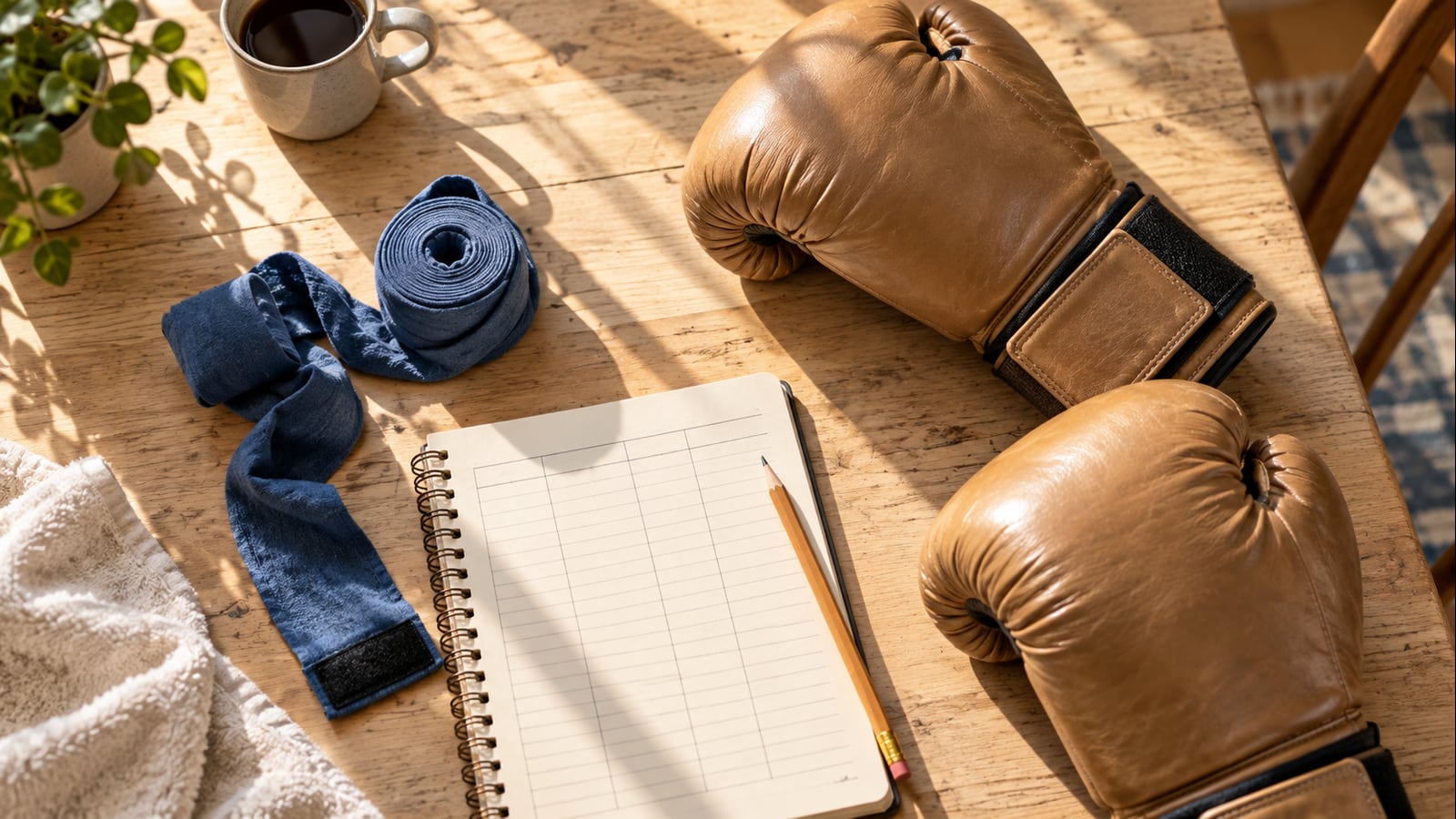
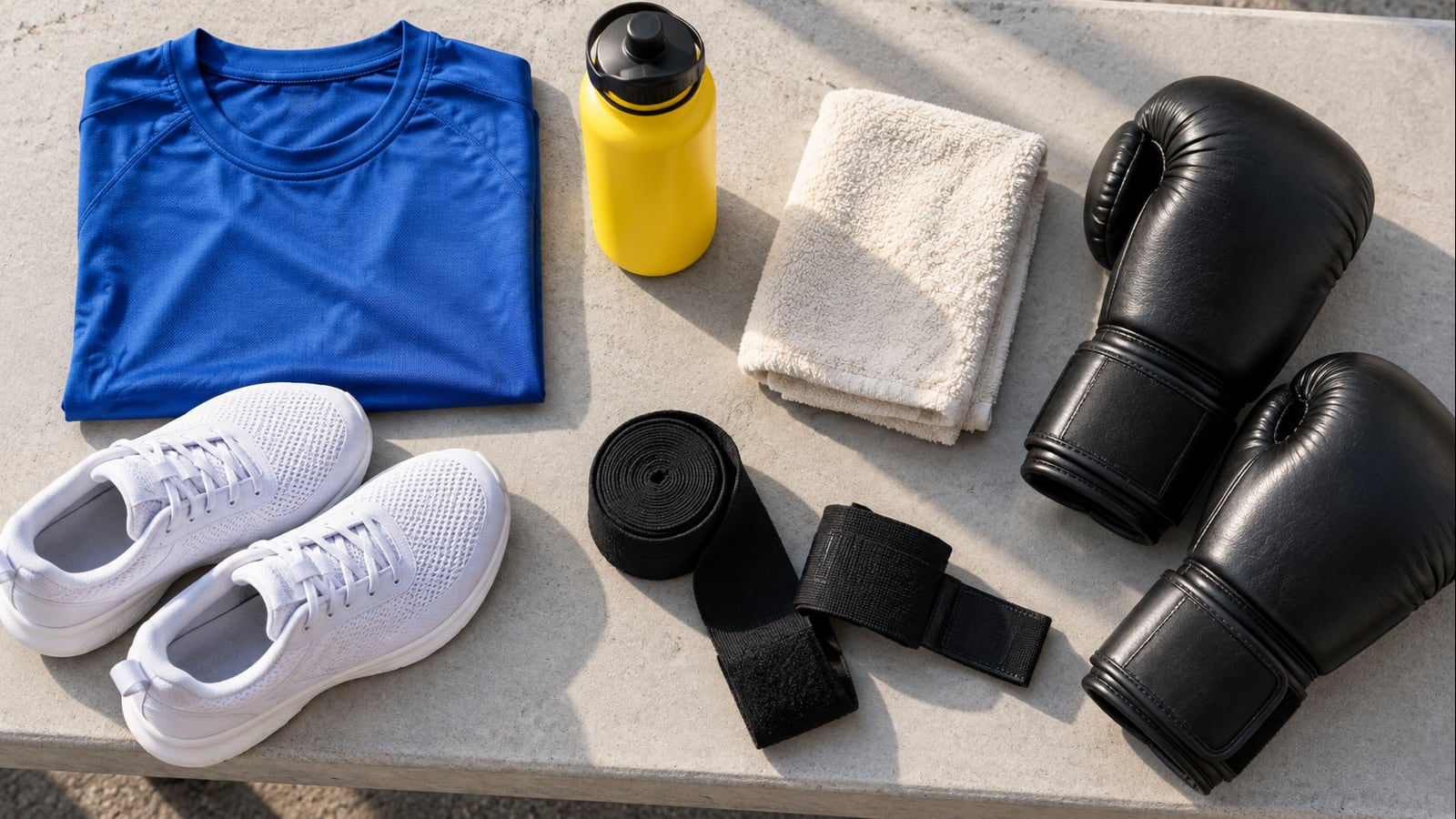
For your first boxing class, bring comfortable workout clothes, suitable clean trainers, water, and a small towel. Confirm the gym’s glove, wrap, and contact requirements before you go. First-visit instructions differ between gyms, so their answer matters more than a universal packing list. [1][2]
Your job is not to arrive looking like a boxer. It is to understand the session, learn a little, and leave knowing whether this is somewhere you want to return.
Ask this before you buy anything
Send a short message: “I’m a complete beginner. Which class should I book, what equipment do I need, and does that session include any contact?”
Then check the arrival time and whether there is a form to complete. Ask specifically about gloves and hand wraps: are they provided, rented, sold, or required from home? “Equipment available” may not answer all four questions.
You do not need to solve every future purchase today. Get the requirements for this class first, then make a shopping decision.
Pack for the session—not for a fight
Wear clothes you can move in. Try lifting your arms and taking a step before leaving home. Choose something you will not have to keep adjusting.
Bring clean training shoes. Check the gym’s footwear rules. A first visit is not, by itself, a reason to buy specialist boxing boots.
Take water and a small towel. Put them where you can reach them without walking through someone else’s practice space.
Bring the hand protection the gym requested. Ask a coach to show you how to fit wraps and gloves rather than pretending you already know. Do not start hitting a bag while waiting for help.
Leave jewelry off for training, and tell the coach about an injury or relevant health issue before starting. Where exercise suitability is uncertain, get advice from a qualified healthcare professional. [3]
What might happen in the class?
A session may include a warm-up, a demonstration of stance or punches, time to practice, and conditioning. Bag-focused classes and technical classes can organize those pieces very differently. Knuckleheads, for example, describes warm-up, bag rounds, and bodyweight work; Altius distinguishes its beginner-friendly classes from technical classes that may include controlled sparring. Those are examples, not a script for every gym. [2][4]
When you watch a demonstration, look for the action you have been asked to perform. You do not have to remember every punch name or decode everyone else’s routine.
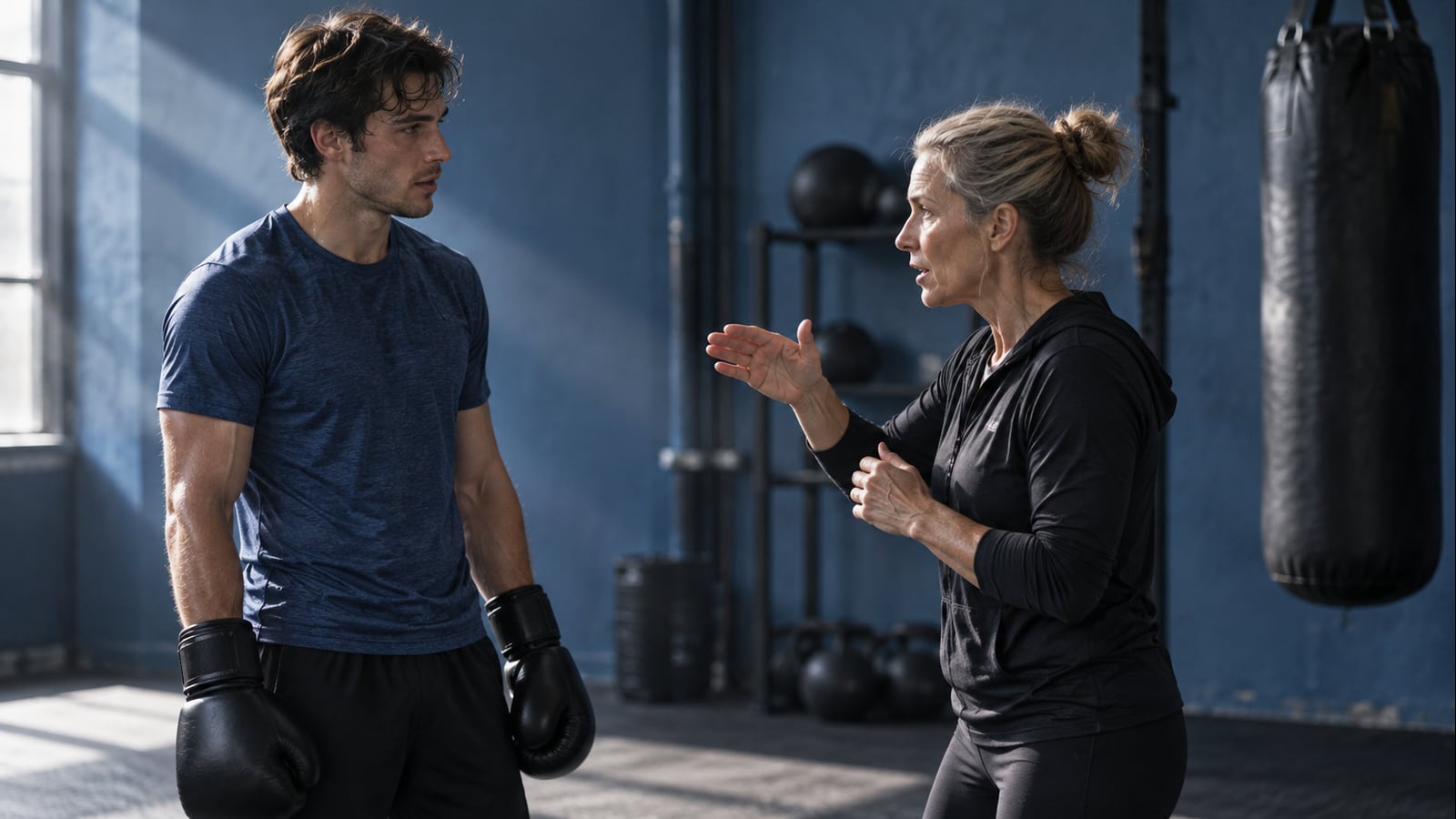
When you get lost, ask, “Can you show me the first part again?” That gives the coach a clear place to help. There is no advantage in practicing a sequence you have misunderstood just to keep up with the room.
Will someone hit me on my first day?
Do not assume that “boxing class” means sparring—or that every beginner class is entirely non-contact. Ask about the exact session. Some gyms advertise non-contact beginner tracks; others describe light-contact drills in classes. [2][5]
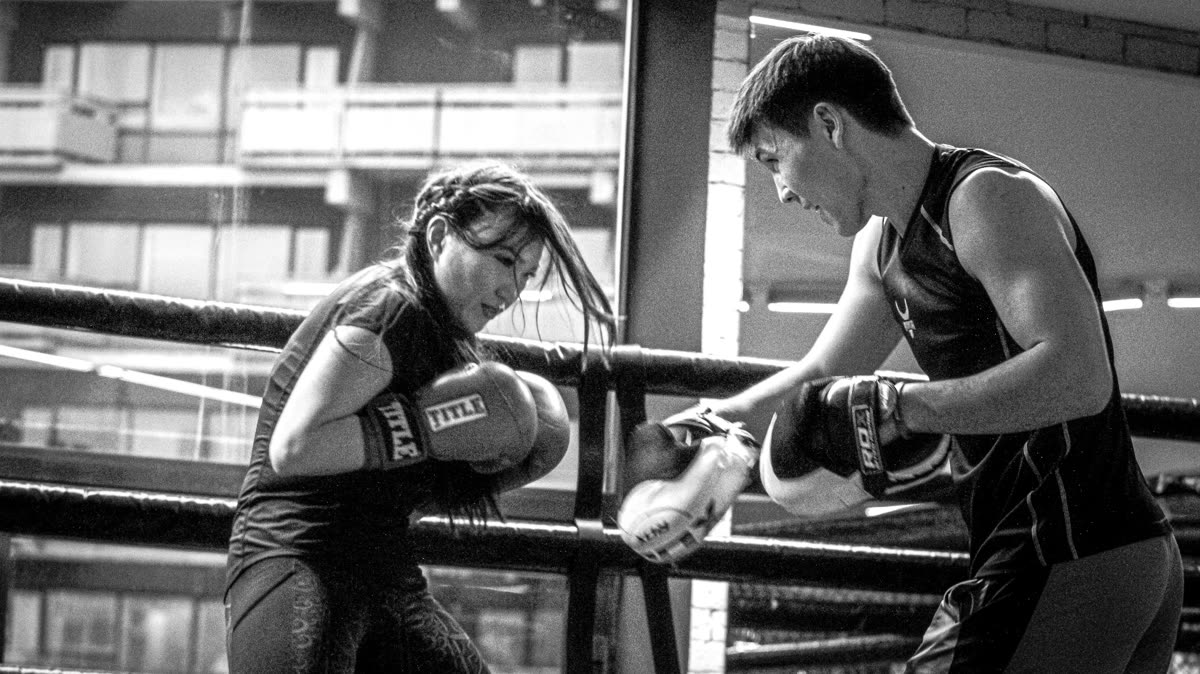
Working with another person can mean holding pads, rehearsing a planned movement, or sparring. Those are not interchangeable. Ask what each person will do and whether punches will make contact with you.
Say clearly when you want non-contact training. You can decline a drill you do not understand or consent to. A vague “you’ll be fine” is not a substitute for an explanation of the activity.
A first class is not a test of how much punishment you can take. Decisions about sparring belong in a separate conversation with a qualified coach, not in an unexpected invitation from another member.
The etiquette is simpler than the equipment looks
Introduce yourself as a beginner. Listen when the coach demonstrates, keep clear of people punching or skipping, and ask before using unfamiliar equipment.
Follow the assigned drill with your partner. Do not turn light practice into a power contest or add punches they were not expecting. If you are asked to hold pads, get shown how first.
Ask about the gym’s cleaning and equipment-return routine. Get permission before filming; the person training behind you did not automatically agree to appear in your video.
When you need a break, tell the coach. Do not hide pain or distress because you think completing every repetition is the entry requirement.
Leave with one useful answer
Before you go, ask: “What should I remember or practice before the next class?” One clear cue is enough.
Then judge the experience by more than how tired you feel. Were instructions explained? Could you ask a question? Were your contact preferences taken seriously? Do you know which session to book next?
You do not need to decide whether boxing will become your whole identity. Decide whether you have enough information to take the next step.
Related questions
Do I need to buy boxing gloves before my first class?
Not necessarily. Ask the gym first: first-visit equipment arrangements differ. Confirm whether gloves are available, whether there is a rental charge, and whether you need your own wraps. Buy for the training you will actually do, not an assumed rule. [1][2]
Can I wear normal trainers to a boxing class?
Ordinary training shoes are accepted for a first visit by some gyms, but check the venue’s requirements. Wear a clean, secure pair suitable for their floor. You do not need to buy boxing boots before knowing what the coach recommends. [1][4]
Do I have to get fit before starting boxing?
You do not need to pass a self-invented fitness test before asking about a beginner class. Tell the coach about your starting point and ask how the session can be adjusted. Medical concerns or uncertainty about exercise safety need healthcare advice, not a harder warm-up.
Does a beginner boxing class include sparring?
It depends on the class. Ask whether it is non-contact, includes partner contact drills, or includes sparring. Make your preferences explicit when booking. A class label alone is not enough information to assume what will happen. [2][5]
What should I do if I cannot keep up?
Tell the coach whether the problem is pace, understanding the movement, or how you feel physically. Ask to simplify the task or take a break. Stop and get help for concerning symptoms rather than trying to earn permission to rest.
How early should I arrive for my first boxing lesson?
Follow the gym’s first-visit instructions. Allow time to meet the coach, complete any forms, and get equipment fitted. Confirm this beforehand rather than arriving at the start time and discovering that preparation was expected. [1][4]
Sources and editorial notes
[1] Cricklewood Boxing Club, “Boxing Gym FAQs,” getting-started and equipment guidance.
[2] Altius Boxing Gym, “FAQs,” beginner classes, equipment, and contact distinctions.
[3] England Boxing, Boxing Coaching Handbook, Part 1, page 11: medical information, hand bandaging, and jewelry.
[4] Knuckleheads Boxing, “Your First Class,” arrival, equipment, and an example class format.
[5] Ayala Boxing Academy, beginner-track FAQ: non-contact classes.
The packing questions, example booking message, etiquette suggestions, and class-debrief prompts are an original preparation guide. They are not the rules or timetable of every boxing gym.