Your jab looks fine when you stand still. Add a step and suddenly one foot is rushing, the other is late, and your hands have their own agenda.
Start with small movements that preserve your stance, then connect one movement to one punch. Practice stepping and settling first. Next, learn a stepping jab. You do not need a speed ladder or a long combination to begin.
The goal is a usable position, not busy feet
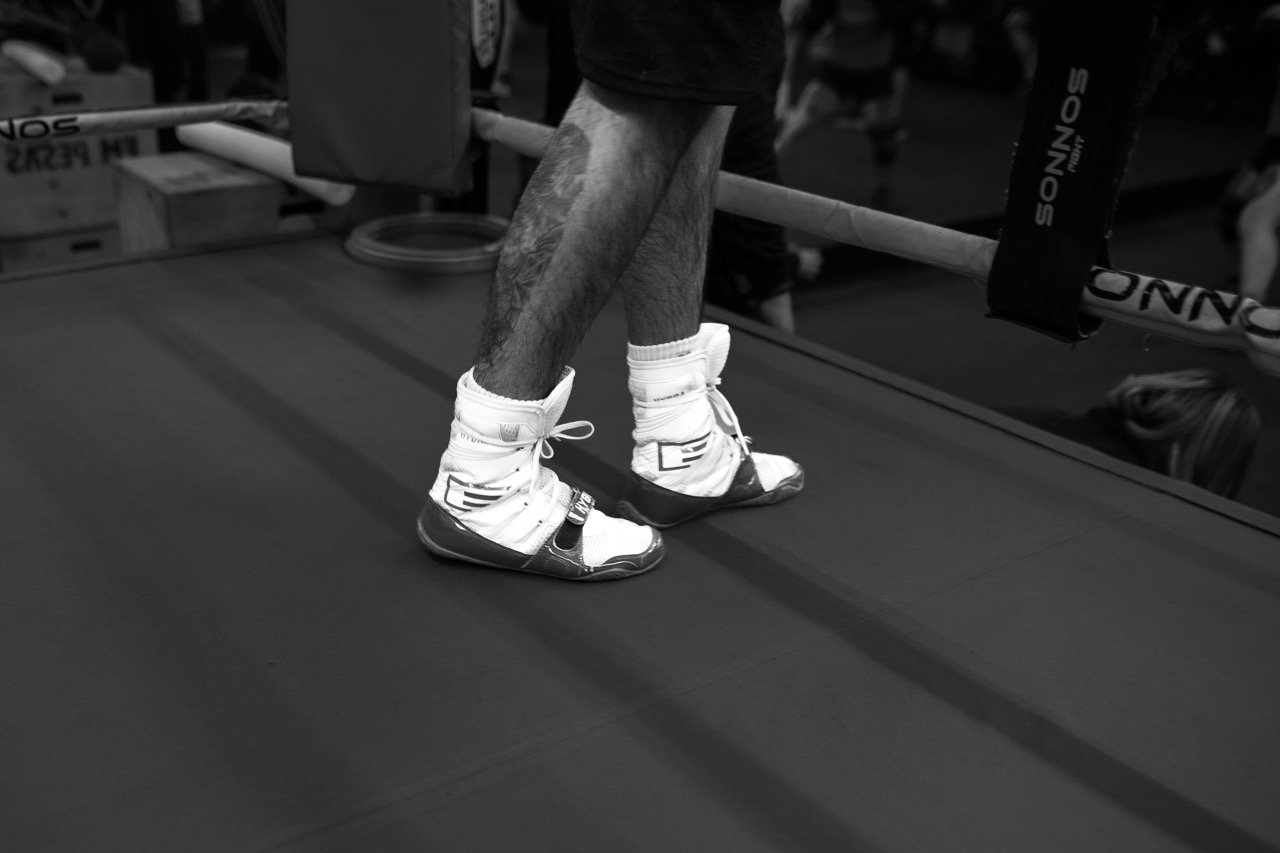
Good beginner footwork should leave you able to act again without rebuilding your stance. England Boxing emphasizes keeping balance and a useful distance between your feet while changing position. [1]
Think about moving your stance across the floor. You are not walking normally, reaching with your head, or hopping to make the movement look athletic.
Clear a non-slip area and warm up. Use the stance you have been taught: lead hand and foot in front, rear hand and foot behind. Keep your eyes ahead rather than looking down throughout the drill.
Which foot moves first?
For these basic directional steps, the foot nearest the direction of travel moves first. The other follows promptly so you finish with roughly your normal stance shape. [2]
Forward: push gently from the rear foot, move the lead foot a small distance, and bring the rear foot along.
Backward: push gently from the lead foot, move the rear foot back, and let the lead foot follow.
Left: move your left foot left, then bring your right foot with it. Right: move your right foot right, then bring your left foot with it. Left and right stay the same whichever stance you use.
Do not cross your feet or bring them together in these beginner drills. Avoid a large first step followed by a delayed drag. The sequence should become one smooth movement, not two unrelated actions.
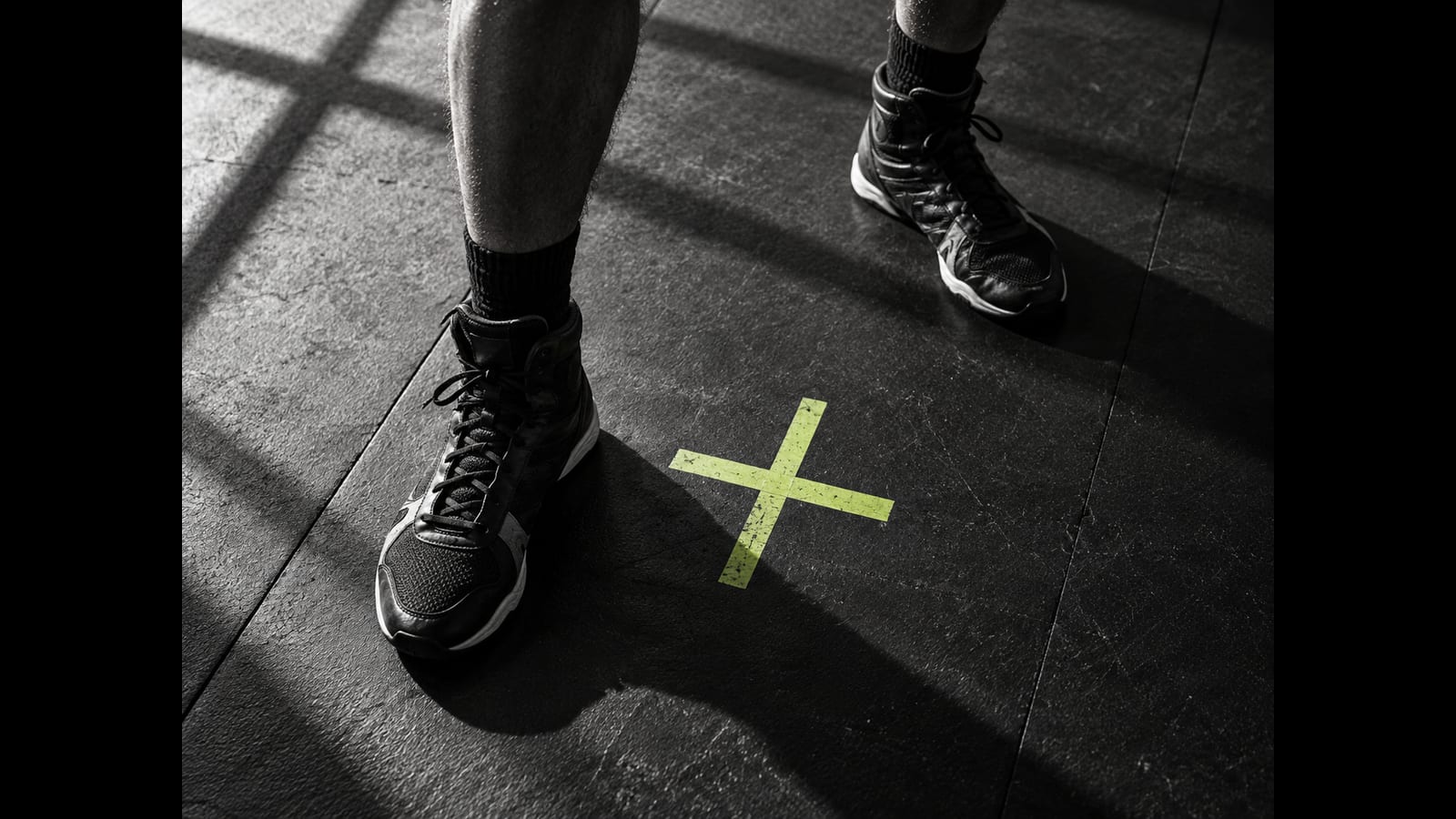
Drill 1: Step, settle, check
Take a small step forward with both feet moving in sequence, then pause. Can you hold your position comfortably with your hands in guard? Return backward and check again.
Try five controlled repetitions forward and back. Then try a few steps each way sideways. Use fewer when concentration or coordination starts slipping.
Look for the missing foot. If your first foot moves but the other stays behind, you stretch your stance. If the following foot comes too close, you narrow it. Make the first step smaller rather than trying to rescue a large one.
Drill 2: Step first, then jab
Take a small forward step, restore your stance, and throw one easy jab. Return the hand to guard, then step back to your starting position.
This is deliberately separated: step, jab, return, move back. It gives you time to notice where the punch starts and where your feet finish.
Repeat slowly a few times. Your checkpoint is whether you can throw the jab without needing an extra balance-saving step. Do not turn the pause into a rule that all real boxing punches must wait until your feet are completely still.
Drill 3: Let the step and jab arrive together
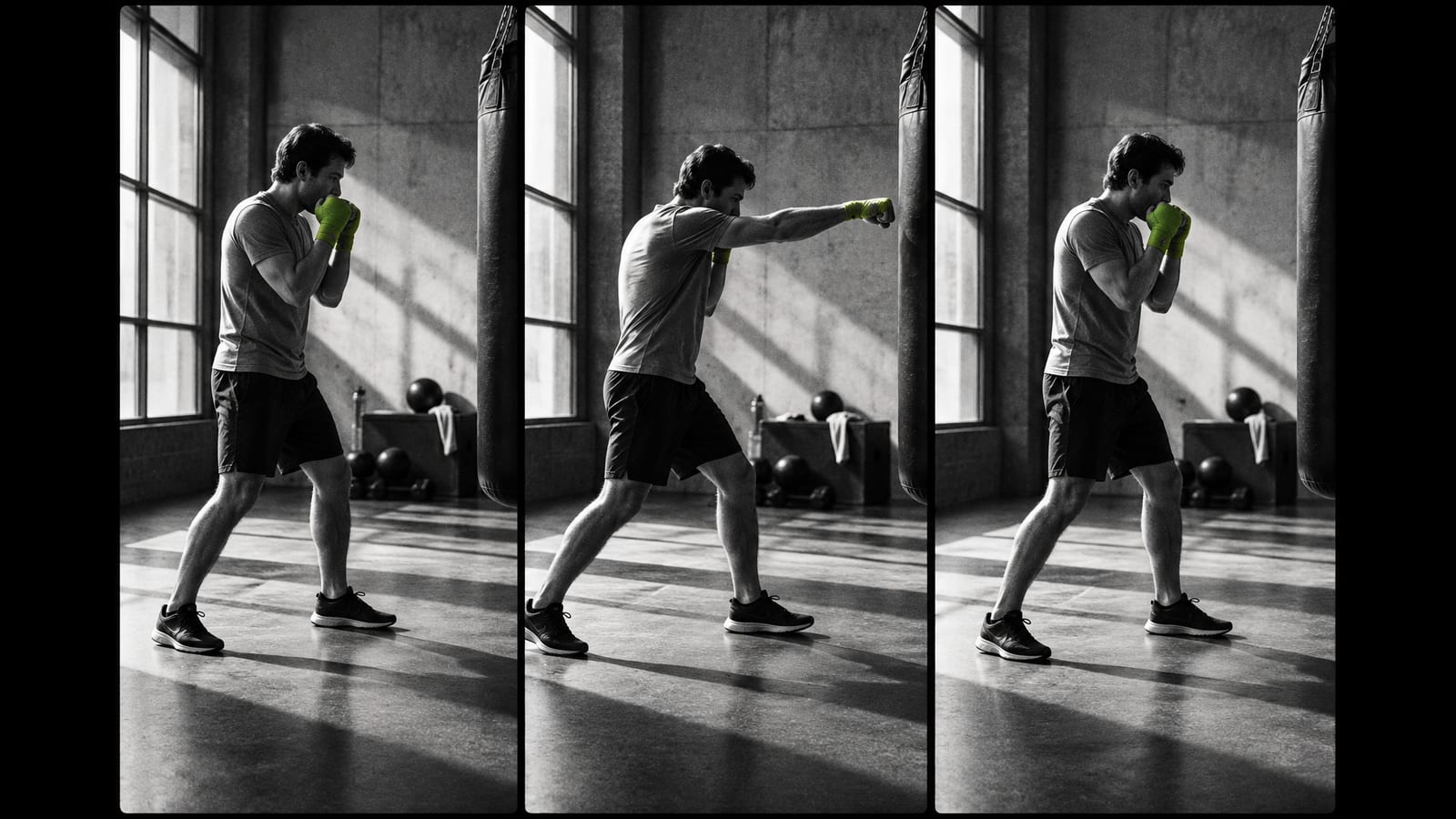
Once the separated version feels comfortable, begin the jab as you make a small forward step. Aim for the jab to reach its controlled extension around the time the lead foot lands, with the rear foot following promptly to restore your stance. [3]
Practice in the air, not by lunging at a bag. Your rear hand stays in guard, and your lead hand returns after the jab. Keep your head over a usable base rather than reaching forward to make the punch longer.
When you can step and jab without the rear foot being left behind, ask your coach to check it. Add a cross only after the supporting stance is there. The next challenge is coordination, not adding three more punches.
Three small fixes when it feels clumsy
Your feet come together: shorten the step and pay attention to where the second foot stops. You are restoring your stance, not closing the gap completely.
You reach with your head: move your feet to adjust distance. Do not try to borrow extra reach by leaning far beyond your base.
Your calf gets tired from standing on tiptoe: do not force a high heel lift. Aim to be ready to move without holding an exaggerated position. Ask a coach to check your stance rather than treating discomfort as proof the drill is working.
Keep one short clip, not a highlight reel
Record a few repetitions with your whole body visible. Compare your stance before and after the movement. Watch the rear foot and your non-punching hand, not just the punch.
Ask a coach one question: “Am I restoring my stance after the step, or leaving a foot behind?” It is a clearer request than “Is my footwork good?”
Use short practice sessions to build familiarity. Once the basic pattern is controlled, work toward a smoother rhythm rather than staying permanently slow and mechanical.
Related questions
Which foot moves first in a southpaw stance?
For a basic forward step, the lead right foot moves first; for a backward step, the rear left foot moves first. For a step left, move the left foot first; for a step right, move the right foot first. Let the other foot follow to restore the stance.
Do I have to punch with the hand on the side I move toward?
No. The hand and direction are not locked together by a universal rule. Different punches and movements have different timing. Learn one reliable pattern at a time with a coach rather than trying to invent every possible combination of steps and punches.
Should I stay on my toes the entire time?
Think ready to move, not permanently high on tiptoe. Do not pin your rear heel to the floor, but do not force an exaggerated heel lift either. Your coach can help you find a stance that stays mobile without unnecessary tension.
Do I need an agility ladder to improve boxing footwork?
No. The beginner movements here need only a clear floor. A ladder can give a drill structure, but it does not check your guard, punching position, or distance. Practice those details directly as well.
Can I jab while moving backward?
Yes, a jab can be coordinated with backward movement. Learn the basic backward step and a controlled jab separately first, then have a coach help you combine them. The stepping-jab example in this article moves forward; do not assume its timing automatically covers every variation.
How do I know my footwork is improving?
Look for repeatable control: you finish in a usable stance, your feet do not collide, and you can add the intended punch without stumbling. Coaching feedback matters more than how fast the drill looks in a video.
Sources and practice notes
[1] England Boxing, Boxing Coaching Handbook, Part 1, “Footwork,” page 68. [2] Fran Sands, MyBoxingCoach, “Boxing Footwork – Moving In and Out with Finesse!” [3] FightCamp, “5 Agility Ladder Drills For Boxing and Kickboxing Footwork,” step-jab demonstration by Aaron Swenson.
The three-drill progression is an original practice example. It covers basic steps and a forward jab, not every footwork style or punching situation.