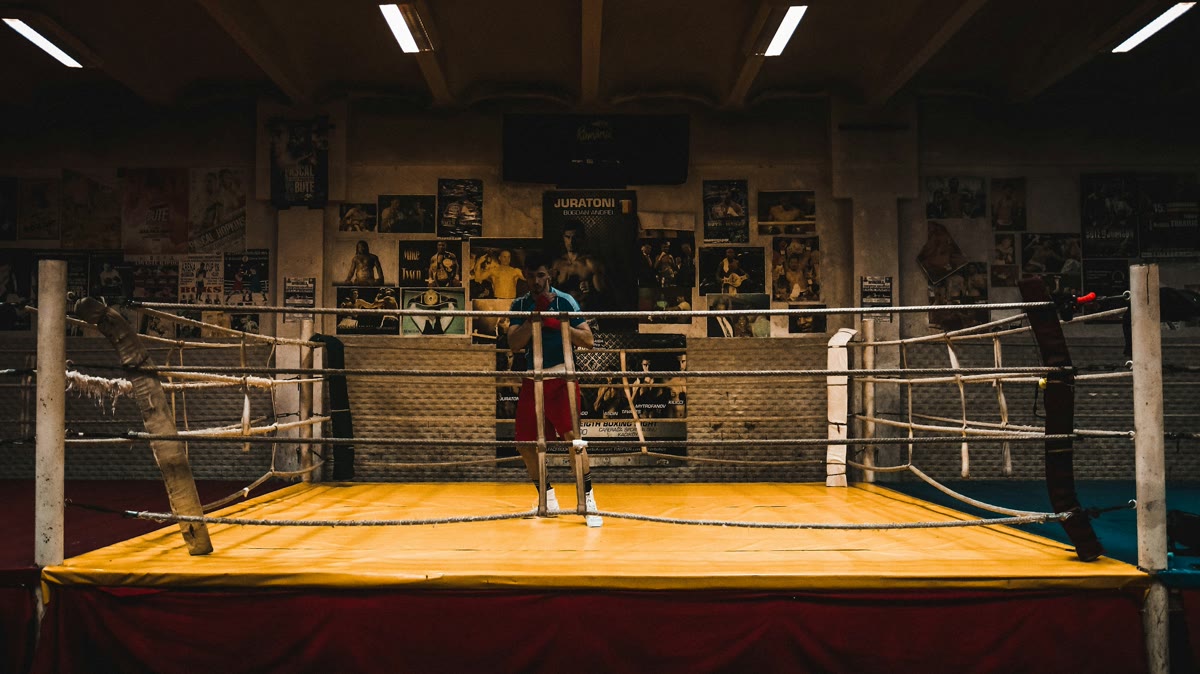
The person beside you is making the bag shake. Another boxer is flying through a pad combination. You’re moving around an empty patch of floor and wondering whether you picked the least useful part of training.
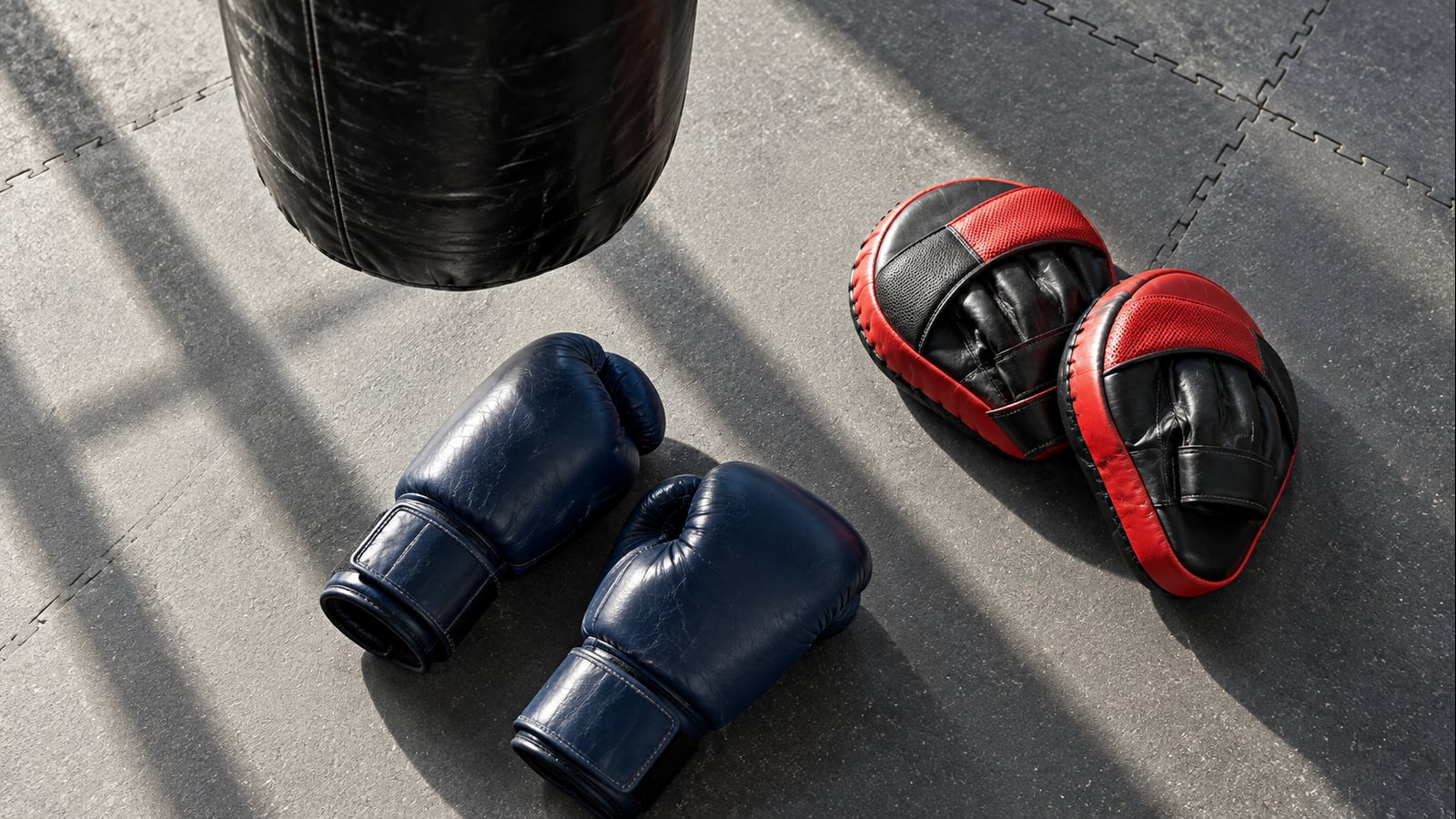
Shadowboxing, heavy-bag work, and pads are different practice setups—not a ranking from pointless to advanced. Shadowboxing removes the physical target. A bag adds contact. Pads add a holder who can present a target and shape the task.
The useful choice starts with a question: what do you need to notice or practice today?
Shadowboxing: take away the target
Shadowboxing is boxing movement without striking a bag or another person. You can rehearse familiar punches, movement, and sequences without organizing each action around making contact. Coach Fran Sands describes it as a way to explore skills and scenarios before using a physical target or opponent. [1]
That makes it an option when your immediate task is connecting movements. For example: can you perform the familiar action, return to your position, and decide what happens next?
Its limitation is equally important: there is no physical target to test your distance against, and no opponent making independent decisions. You can repeat a mistake without receiving an obvious warning.
Do not judge the work by how cinematic your imaginary fight looks. A short, purposeful rehearsal of something you have learned is a clearer goal than performing a collection of moves for a mirror.
Heavy bag: add a physical target
A heavy bag gives punches somewhere to land. That lets a practice task include contact, distance from a real object, and movement around it. Sands’s heavy-bag guidance emphasizes staying aware of range and position instead of simply driving the bag around. [2]
Use appropriate hand protection and instruction before making contact. The bag will not tell you whether your wrist position or punching action is suitable.
Try thinking of it as a target for a specific task rather than a request to hit at maximum effort. A loud impact is not, by itself, a technical assessment.
The limitation: even a swinging bag does not choose when to attack, defend, or change tactics. Practicing on one is not the same as solving the decisions a live partner creates.
Pads: add a person who can shape the task
With pads or focus mitts, a holder presents targets and can change the instruction, position, or timing. When a qualified coach is holding, they can also observe and correct your response.
England Boxing treats padwork as a tool with several possible purposes, including teaching and fault correction. It also warns that poorly pitched padwork can reinforce mistakes. The presence of pads does not guarantee good instruction. [3]
A pad routine can be a familiar rehearsed sequence, a slower technical task, or a different coach-led challenge. Ask which one you are doing rather than assuming that more complicated means more useful.
If you are asked to hold pads, get shown how. Do not improvise with a partner who expects you to know the targets and signals.
Choose by the question you need answered
“I forget what happens after my punch.” Consider a simple no-contact rehearsal of the sequence your coach taught. Remove the need to hit anything while you work out the order.
“I can rehearse it, but contact changes what I do.” Ask a coach to supervise transferring the familiar action to an appropriate target. More complicated shadowboxing may not answer this particular question.
“I don’t know whether I’m doing it correctly.” Seek observation and feedback. Paying for a different piece of equipment does not guarantee anyone will check your movement.
“I want conditioning.” Ask how the session is designed. The tool name alone does not tell you the intensity, duration, or recovery.
Which one is the hardest workout?
You cannot reliably answer that from the equipment alone. A gentle pad lesson and a demanding pad routine are very different sessions.
A study of 14 elite male amateur boxers compared a defined bag protocol with a defined pad protocol and found different physiological and movement demands. That finding describes those sessions—not a universal rule that pads or bags are always harder. [4]
For your own training, name the purpose first. A skill session does not become a failure because another tool would make you sweat more.
You can carry one question across all three
Imagine you and your coach are checking your position after a jab. You might first rehearse without contact, then work against a bag, then revisit the action with the coach on pads.
That is an example of changing the practice setup while keeping the question consistent. It is not a required three-stage workout, and it does not mean you need access to all three every day.
The result you are looking for is an answer: did the correction remain when the task changed?
Choose a practice guide after choosing the tool
For a beginner round sequence, use the shadowboxing guide. For a contact-based practice plan, use the beginner heavy-bag guide after learning the movements and setup with a coach.
This comparison answers why choose the tool. Those guides answer what to do during the round. You do not need to combine every option into one oversized session.
Related questions
Is shadowboxing better than hitting a heavy bag?
Neither is universally better. Shadowboxing removes contact and the physical target; bag work adds them. Choose according to the task you have learned and the feedback you need, rather than ranking tools by how impressive the session looks.
Should I do both shadowboxing and heavy-bag work?
They can serve different purposes in the same training plan, but you do not need both in every session. Ask which practice setup suits your current instruction and available supervision. Keep the session manageable instead of adding equipment for its own sake.
Are boxing pads only for advanced boxers?
No. Padwork can be used to teach basic actions as well as more complex tasks. The holder should match the task to the boxer’s level. Getting shown a short, suitable drill matters more than copying an advanced routine. [3]
Do I need a coach to hold pads?
Use a qualified coach or an appropriately instructed partner under supervision. Pad holding is a skill, not just putting your hands up. When the goal is correcting technique, make sure someone qualified is actually watching and giving feedback.
Which is better for cardio: a bag or pads?
The design of the session matters. Work rate, duration, breaks, and the task all affect what you are doing. Research comparing specific protocols does not establish a single winner for every beginner or every routine. [4]
Can shadowboxing, pads, and a bag replace sparring?
They do not reproduce every decision and response of live sparring. That does not mean you must spar to enjoy boxing training. Contact is a separate, coach-supervised choice; completing these drills does not establish readiness to do it.
Sources and editorial notes
[1] Fran Sands, MyBoxingCoach, “Shadow Boxing – 7 Tips for Success,” description and purpose of shadowboxing.
[2] Fran Sands, MyBoxingCoach, “The Heavy Bag – 5 Rules to Hit By!,” range, control, and hand protection.
[3] England Boxing, Boxing Coaching Handbook, Part 1, page 96: purposes and quality of padwork.
[4] Finlay and colleagues, “Physical Response to Pad- and Bag-Based Boxing-Specific Training Modalities,” Journal of Strength and Conditioning Research, 2020; PMID 30358696.
The question-based comparison and example of carrying one correction between tools are original editorial examples. Study results in trained male boxers are not a beginner workout prescription or proof of a universal best tool.