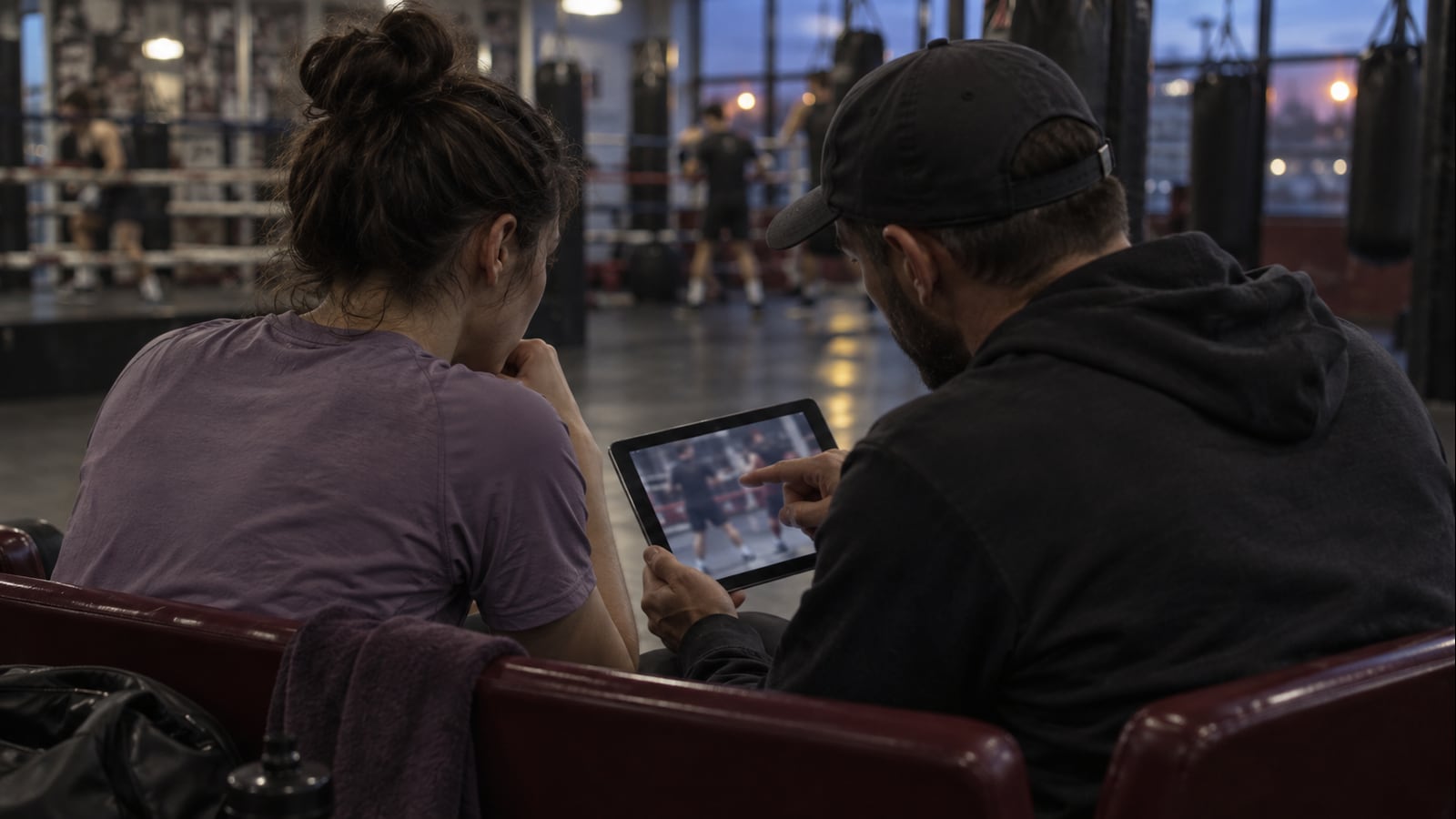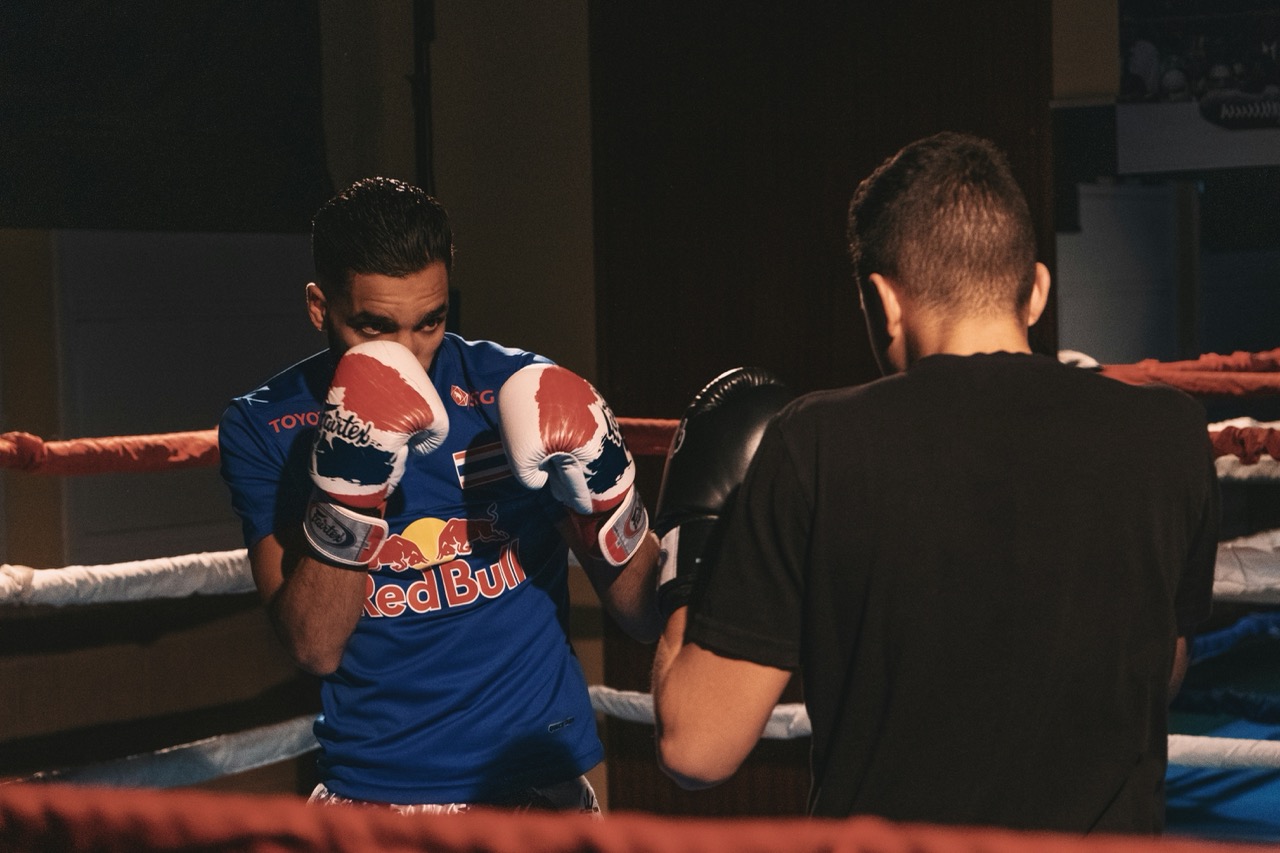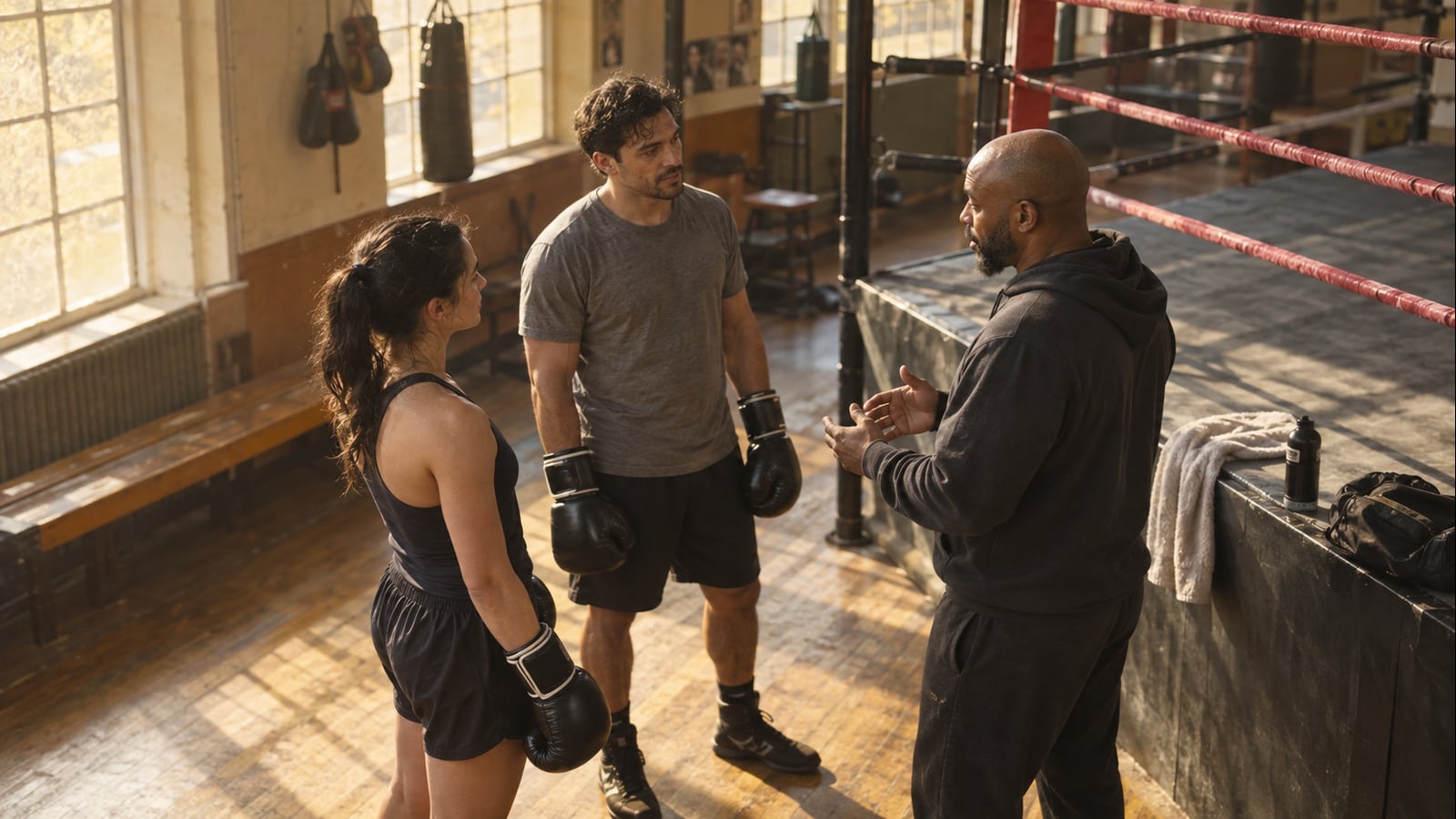
A reset gives you something better to do. It is a short sequence that restores protection and decision-making before you re-enter the exchange: guard, base, eyes, jab. Practice it when the stakes are low so it is available when a round becomes messy.
Step 1: Close the door
Bring both hands back to useful guard positions and reconnect the elbows to the body. Keep the chin protected without folding forward at the waist. The first goal is not to answer the punch—it is to stop the next clean shot from arriving through the same opening.
Avoid covering your eyes with both gloves for too long. A compact guard should protect you while still allowing you to see. Use a small shell, parry, or clinch only within the rules and under proper coaching, then move to the next step of the reset.
Step 2: Find your base
Check the feet. If you were caught while reaching, stepping, or leaning, your stance may be narrow or stretched. Take one small step or pivot to bring the hips back under you. Soft knees and a centered head make it easier to defend without falling into another large movement.
Do not sprint straight backward with the chin high. A short exit at an angle is often easier to control. The purpose is to buy enough space for a clear decision, not to escape the entire ring in one move.
Step 3: Reconnect your eyes
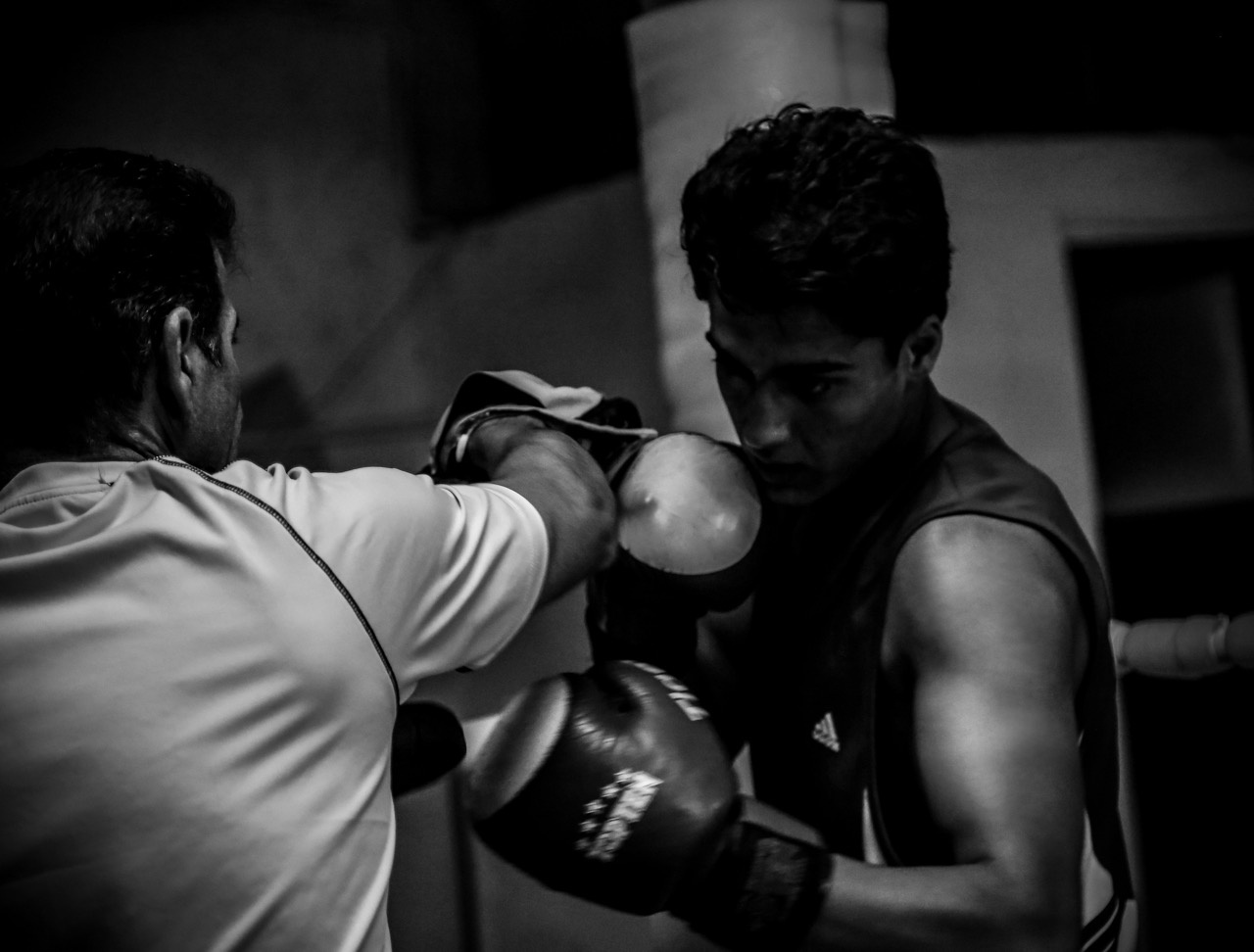
Look back at the opponent’s upper body and breathe out. Losing visual contact makes every follow-up feel faster. A calm gaze helps you notice whether pressure is continuing, whether the opponent is resetting too, or whether an exit is open.
This is also the moment to release the urge for revenge. One punch does not decide the whole round. The next useful decision matters more than proving immediately that the shot did not affect you.
Step 4: Take back the exchange
Use a low-risk action to re-establish your presence. A jab, double jab, or clear feint can interrupt the opponent and give you information. You do not need a hard combination. You need an action that lets you think while making the other boxer respond.
After the jab, move again. The reset is complete when you are protected, balanced, seeing clearly, and choosing the next exchange—not when you have thrown the same number of punches back.
Practice the reset before you need it
During light partner work, agree that a clean shoulder touch or controlled glove touch triggers the sequence. Both partners pause the attack while the defender restores guard, steps to balance, reconnects the eyes, and returns a light jab. On the bag, ask a coach to call “reset” at random moments and perform the same four actions. Change the starting position occasionally so the reset works after a missed punch, a rushed entry, or an awkward exit—not only after one rehearsed mistake.
The goal is not to pretend punches do not matter. It is to prevent one mistake from becoming three. Guard, base, eyes, jab—then box the next moment.