On the pads, the combination makes sense. In sparring, the opening disappears, your feet stop, and the punch you meant to throw never leaves your guard.
When boxing skills seem to disappear under pressure, first identify what changed. Was the movement itself unfamiliar, was the cue harder to recognize, or did the situation give you more decisions than you could manage? The next practice task should address that specific gap—not automatically add harder sparring.
A disappointing round is a description of one performance. It is not a complete explanation of your ability, and it does not tell you whether the answer is technical, tactical, physical, or psychological.
Ask whether you are comparing the same task
Consider a familiar pad sequence. The coach calls the combination, holds the targets, and gives you a known order. Now compare a round in which the other boxer changes distance, interrupts you, and chooses when to act.
The second task contains questions the first may not have asked. Can you recognize the opportunity? Is the target still available? What happens after your first action?
That does not make padwork useless. It means “I can perform this sequence when it is called” and “I can choose and apply it in this situation” are different claims. Diagnose the difference before judging the practice.
Coach Fran Sands' sparring guidance distinguishes predetermined technical work, conditioned tasks, and more open exchanges. That offers a way to discuss the gap without treating unrestricted sparring as the only learning tool. [3]
Replace “I freeze” with one observable moment
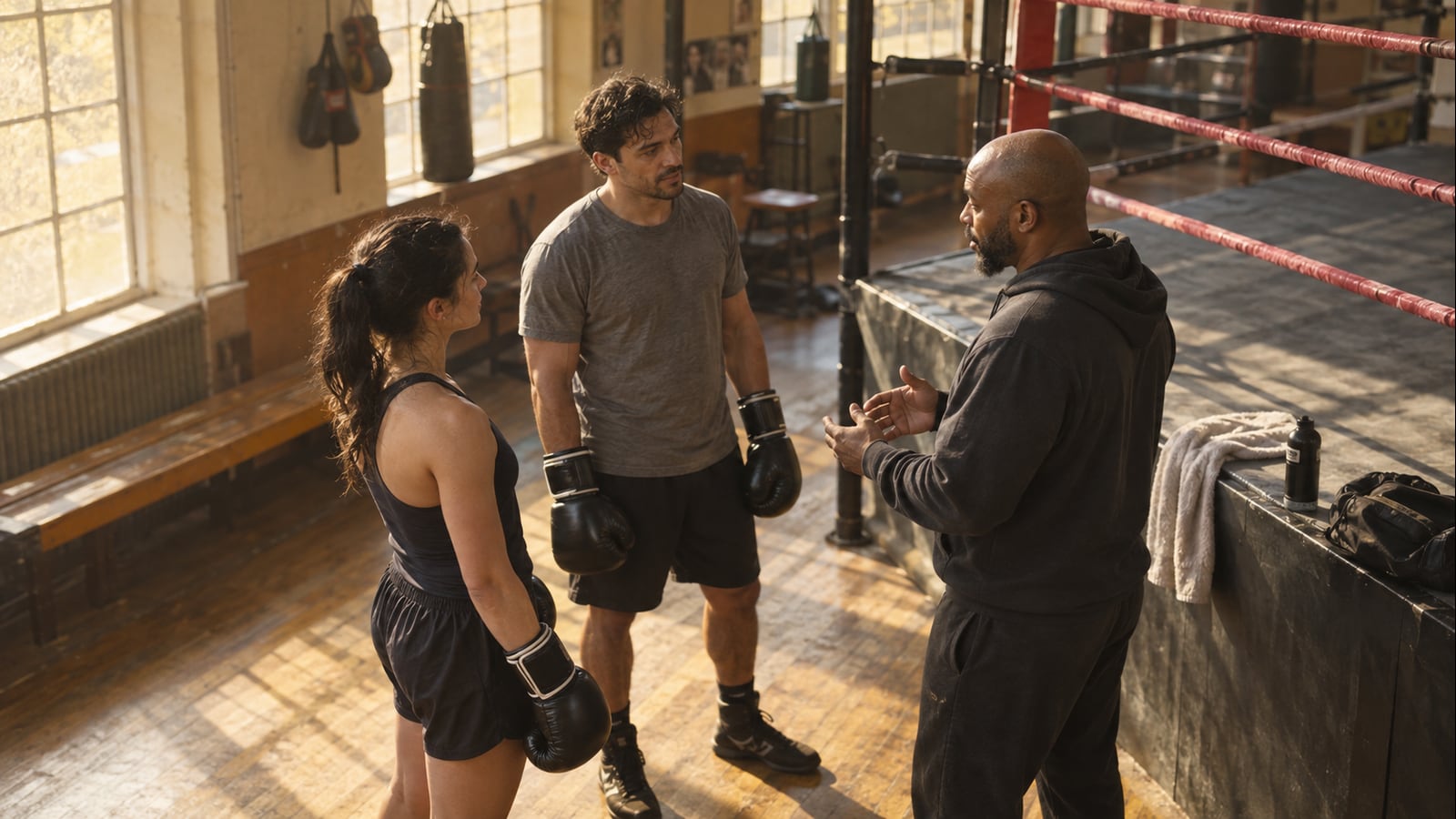
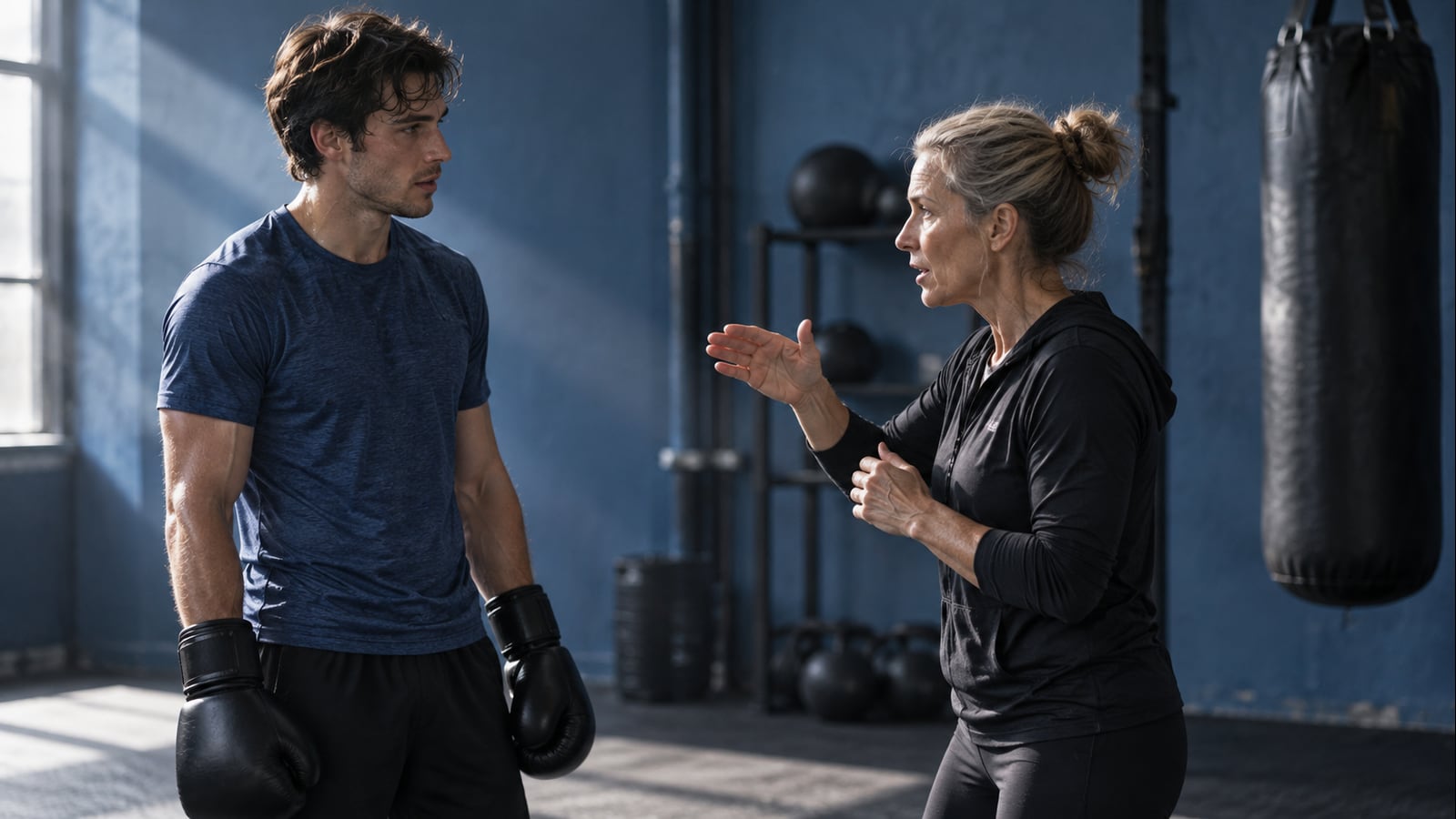
Take a short, specific example to your coach. “I freeze every time” is harder to work with than “When my partner stepped forward behind the jab, I stopped making decisions.”
Then separate what you noticed from your explanation. “My feet stopped” is an observation. “I have no confidence” is an interpretation that may or may not explain it.
Use the following questions as a conversation guide, not a self-diagnosis.
Did I see the cue? Perhaps the opening you were waiting for did not happen, or you were unsure what to watch. Ask the coach to show the moment again in a simpler setting.
Did I know a response? You may recognize the situation but have no familiar answer for it yet. The issue is then more specific than forgetting everything you know.
Could I perform the response there? An action that feels comfortable at one distance may need correction at another. Ask the coach to compare your position before and after it.
Were the conditions appropriate? Unwanted escalation, a mismatch, or being too fatigued to defend is not something to rebrand as useful pressure. Stop an unmanageable contact session and address the conditions first.
Build a bridge smaller than “spar more”
Once you and your coach identify a moment, discuss a task that preserves its important feature while reducing the rest of the complexity.
For example: “I can return to stance after my jab on the pads, but I stop when my partner changes distance. Can we practise recognizing that change and resetting, without adding more punches?”
That is an original example of narrowing a question—not a universal drill. Your coach decides the setup, contact limits, and whether it is appropriate for you.
England Boxing's sparring resource treats task, timing, speed, space, and other conditions as variables a coach can adjust. More realistic decision-making does not require increasing all of them together. [4]
Ask what the next change is supposed to reveal. If the answer is just “make it harder,” make the learning goal clearer first.
Choose a cue you can actually use
“Relax, move, defend, counter, breathe, be confident” is a lot to carry into one exchange. For the next appropriate practice task, agree on a single usable cue with your coach.
A cue might concern the start—“notice the distance”—or the finish—“return to stance.” It should connect to something you have rehearsed, rather than demand a personality change such as “be fearless.”
Do not judge the cue by whether you suddenly look impressive. Ask whether it helped you remember the agreed task. Keep it, simplify it, or replace it based on that conversation.
The US Olympic & Paralympic Committee includes attention, self-talk, routines, and other psychological skills within mental-performance work. These are skills to develop, not a promise that one phrase removes pressure. [5]
Use a four-line debrief instead of replaying the whole disaster
Here is a suggested note format for a round your coach considered appropriate. Use plain descriptions; you are collecting something to work on, not writing a verdict.
I intended to: “Recognize the jab and use the defense we practised.”
What actually happened: “I saw the first jab, then guessed the timing of the next one.”
What we need to check: “Was I reading the cue or following a rhythm?”
Next practice question: “Can I wait for that cue when the timing changes?”
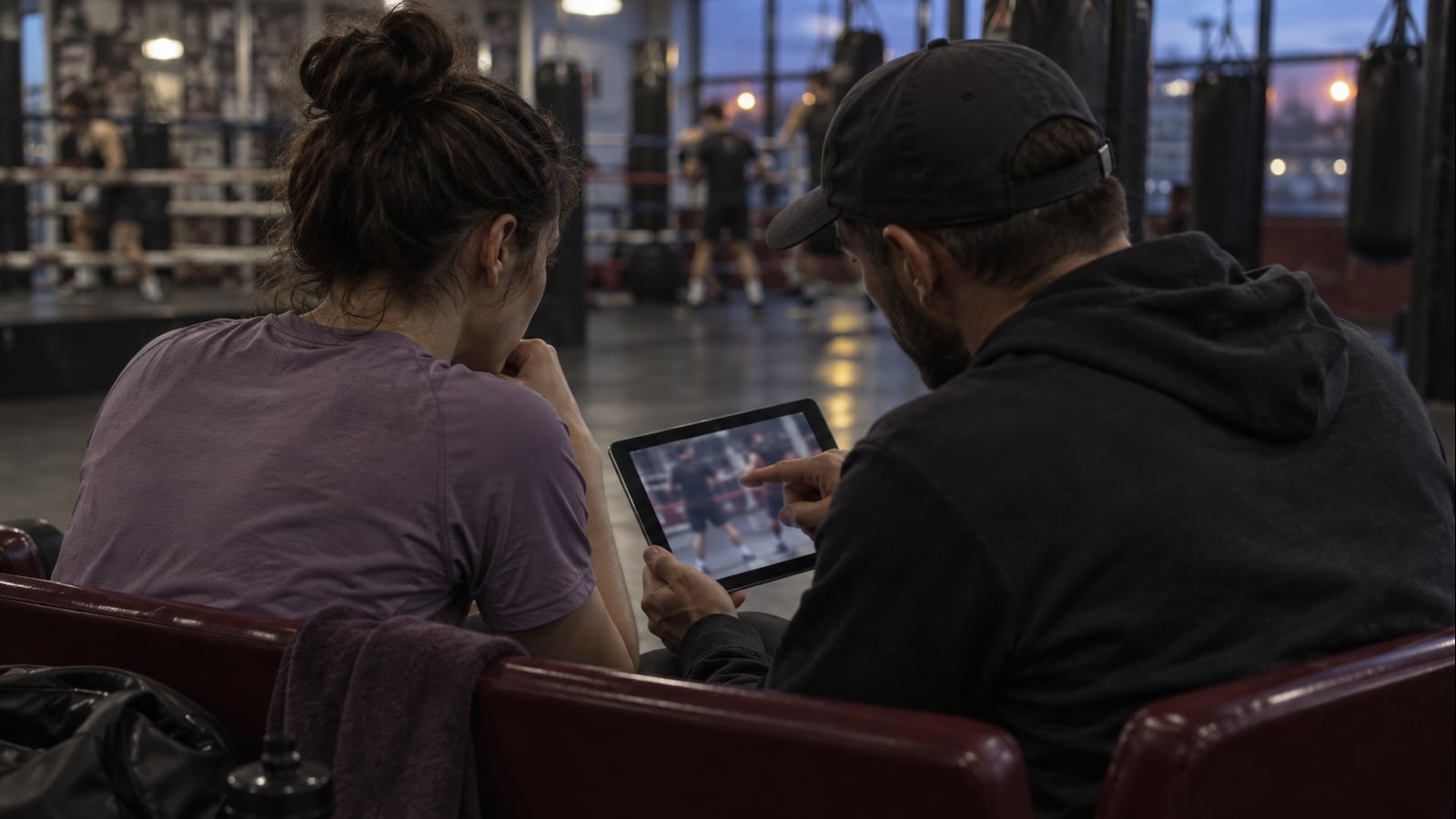
A short recording can help you and the coach discuss a specific moment, provided the gym and everyone recorded agree. England Boxing has documented coach-development sessions using sparring footage, tactical review, and another opportunity to apply the discussion. That is an example of a feedback process, not evidence that filming alone fixes performance. [6]
Keep the review small enough that you can act on it at the next session.
First sparring and competition nerves are not the same case
During a first experience of sparring, almost everything may feel unfamiliar. The useful conversation may be about readiness, the partner, the agreed limits, and a simpler introductory task. Do not jump straight to labels such as “choking.”
An experienced boxer describing a gap between ordinary gym work and bouts needs a different comparison. What changed: the opponent, available information, rules, pace, preparation routine, or the significance attached to the result?
Make two columns in your notes: what genuinely changed and what I am assuming changed. For example, “I faced an unfamiliar opponent” is different from “I always fail when it matters.” Ask your coach which observations are visible in the footage.
This article cannot determine the cause of a person's competition difficulties from that description. A repeated problem deserves an individual review rather than a generic prescription to become more aggressive.
When the next step is specialist help
If performance worries keep disrupting training or competition, consider a qualified sport-psychology or mental-performance practitioner alongside your coach. Discuss the setting in which the problem occurs and what you have already tried. Mental-performance support is part of sport preparation, not proof that you are weak. [5]
When anxiety extends well beyond sport, or your wellbeing is suffering, seek support from an appropriately qualified mental-health professional. Do not use another hard round as a substitute for that conversation.
Keep independent practice useful—and honest
Knockout can help you revisit fundamentals independently. It cannot assess a head injury, diagnose a performance block, or replace responsive partner practice and coaching. Rehearse the piece your coach has identified, then return for feedback. [7]
Related questions about boxing under pressure
Why can I hit pads well but struggle in sparring?
A known pad sequence may supply the timing, target, and order for you. A sparring partner can change those. Compare the exact tasks with your coach: do you need to refine the movement, recognize an opening, or make a different decision?
Does freezing in sparring mean I am not suited to boxing?
That conclusion does not follow from one difficult round. Describe the moment and review both your preparation and the conditions. The relevant next step may be a simpler task, a different setup, specialist support, or choosing non-contact practice—not a verdict about your character.
Will harder sparring make my skills automatic?
Do not assume that increasing contact solves a decision-making problem. Ask the coach which specific skill is being developed and how the conditions support it. A constrained task can isolate a question that unrestricted exchanges obscure. [3][4]
What should I focus on during a learning round?
Agree on one task that uses a skill you already know. Choose an observable cue or finish position with your coach. “Do the thing we practised when this situation appears” is easier to review than “stop being nervous.”
What if I perform well in the gym but badly in bouts?
Review actual differences in preparation, opponent, task, and your experience of pressure. Avoid diagnosing the cause from the result alone. Work with your coach, and consider qualified sport-psychology support when the difficulty persists. [5]
Can I practise the pressure gap on my own?
You can rehearse familiar actions and prepare questions or a routine. Alone, however, you supply the imaginary partner's choices. Treat solo work as preparation for feedback, not proof that the same skill will transfer unchanged into a responsive exchange.
Sources and scope
The questions behind this guide come from Knockout’s saved Reddit research. Coaching and safety claims were checked separately against the sources below. The sample questions, worksheets, and practice examples are editorial suggestions—not tested protocols or individual clearance to take part in contact boxing.
[1] NHS. Head injury and concussion.
https://www.nhs.uk/conditions/head-injury-and-concussion/
[2] Centers for Disease Control and Prevention. Responding to a Sports-related Concussion.
https://www.cdc.gov/heads-up/response/index.html
[3] Fran Sands / MyBoxingCoach. Sparring — Boxing Training.
https://www.myboxingcoach.com/sparring-boxing-training/
[4] England Boxing. Sparring Resource (2021).
https://www.englandboxing.org/wp-content/uploads/2021/07/Sparring-Resource-Final.pdf
[5] United States Olympic & Paralympic Committee. Mental Performance. Relevant official description was available in indexed text; a direct page request was blocked.
https://www.usopc.org/mental-performance
[6] England Boxing. Sparring and Strategy: Women’s Coach Development Programme Hosts Hands-on Workshop.
https://www.englandboxing.org/news_articles/sparring-and-strategy-womens-coach-development-programme-hosts-hands-on-workshop/
[7] Knockout. Knockout — Boxing Training.
https://www.knockoutboxing.app/