“Hands up.” You raise them. “Relax.” You loosen up—and the hands fall straight back down.
It can sound as though your coach is asking for two opposite things. They are not.
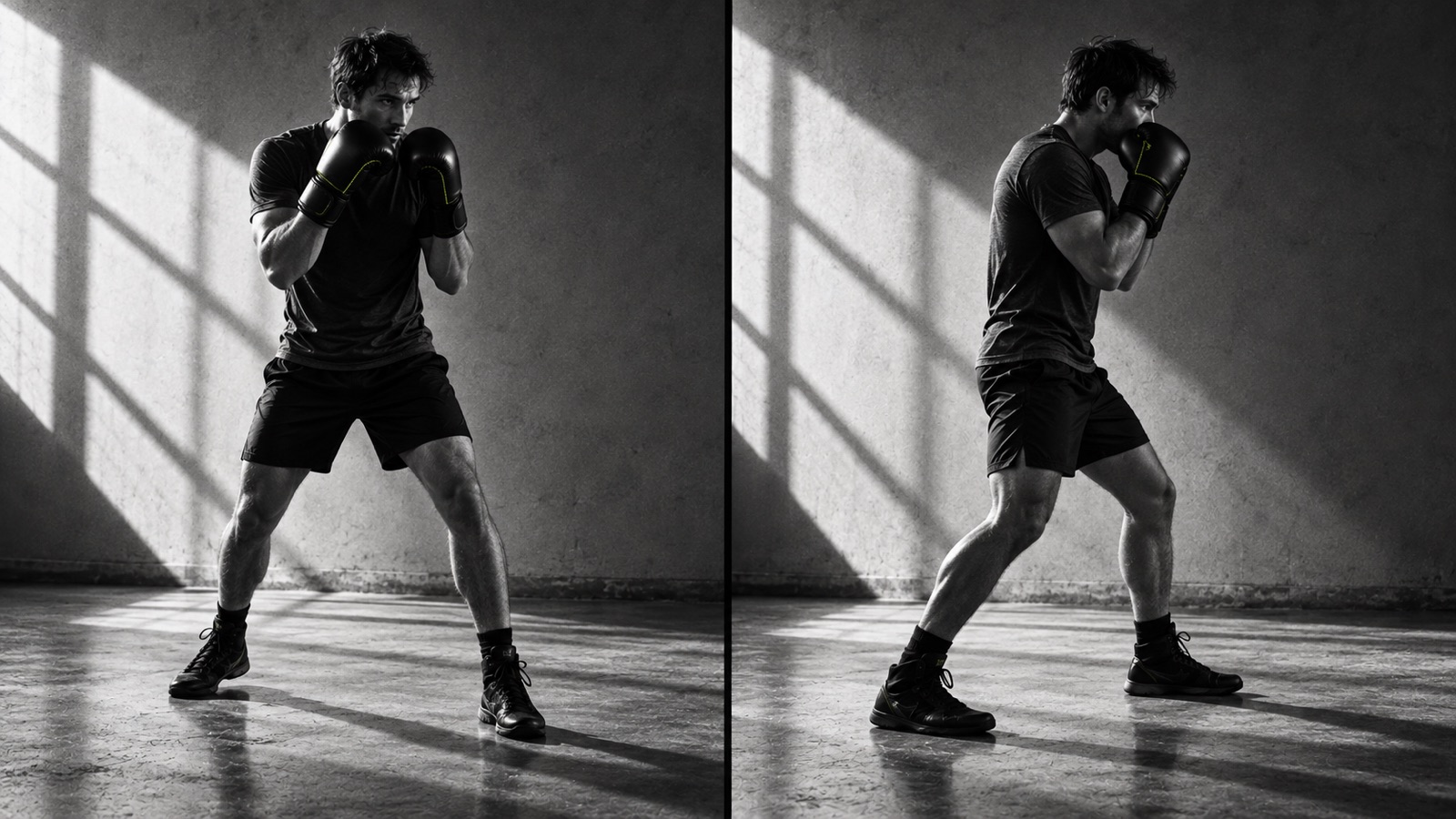
A starting boxing guard combines useful hand position with enough freedom to move and punch. You are not trying to hold every muscle as tightly as possible. England Boxing’s coaching guidance explicitly pairs a protective guard with staying relaxed and returning the hands quickly. [1]
Start with a conventional guard you can discuss with your coach. Then check what happens when you actually move.
Start with a position—not a pose
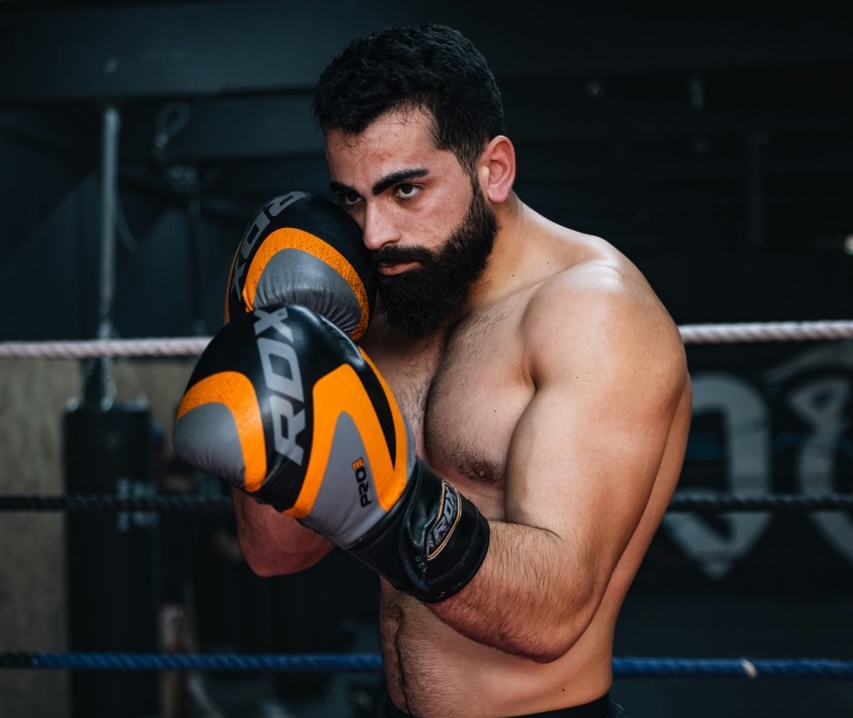
For a conventional beginner guard, useful landmarks include the hands near cheek level, elbows in rather than spread wide, and a slightly lowered chin with the eyes still forward. These are starting cues, not exact measurements for every boxer. [1][2]
Think of the position as a home you return to, not a photograph you must hold unchanged. Your next action might be a step, a punch, or a coached defensive movement. The position should let you begin that action without a large rearrangement.
If your coach has shown you a different position for a particular task, ask what it changes. Do not combine half of that instruction with half of an unrelated video and expect a coherent guard.
Hands: find home, then notice the return
First, find the starting position your coach demonstrated. Next, throw one familiar punch slowly into empty space and bring the hand back. Watch what the other hand does too. Returning the punching hand and maintaining the non-punching hand’s position are standard coaching points. [1]
A common observation question is: “Does my hand come home, or does the combination simply end?” You do not need a longer combination to investigate it.
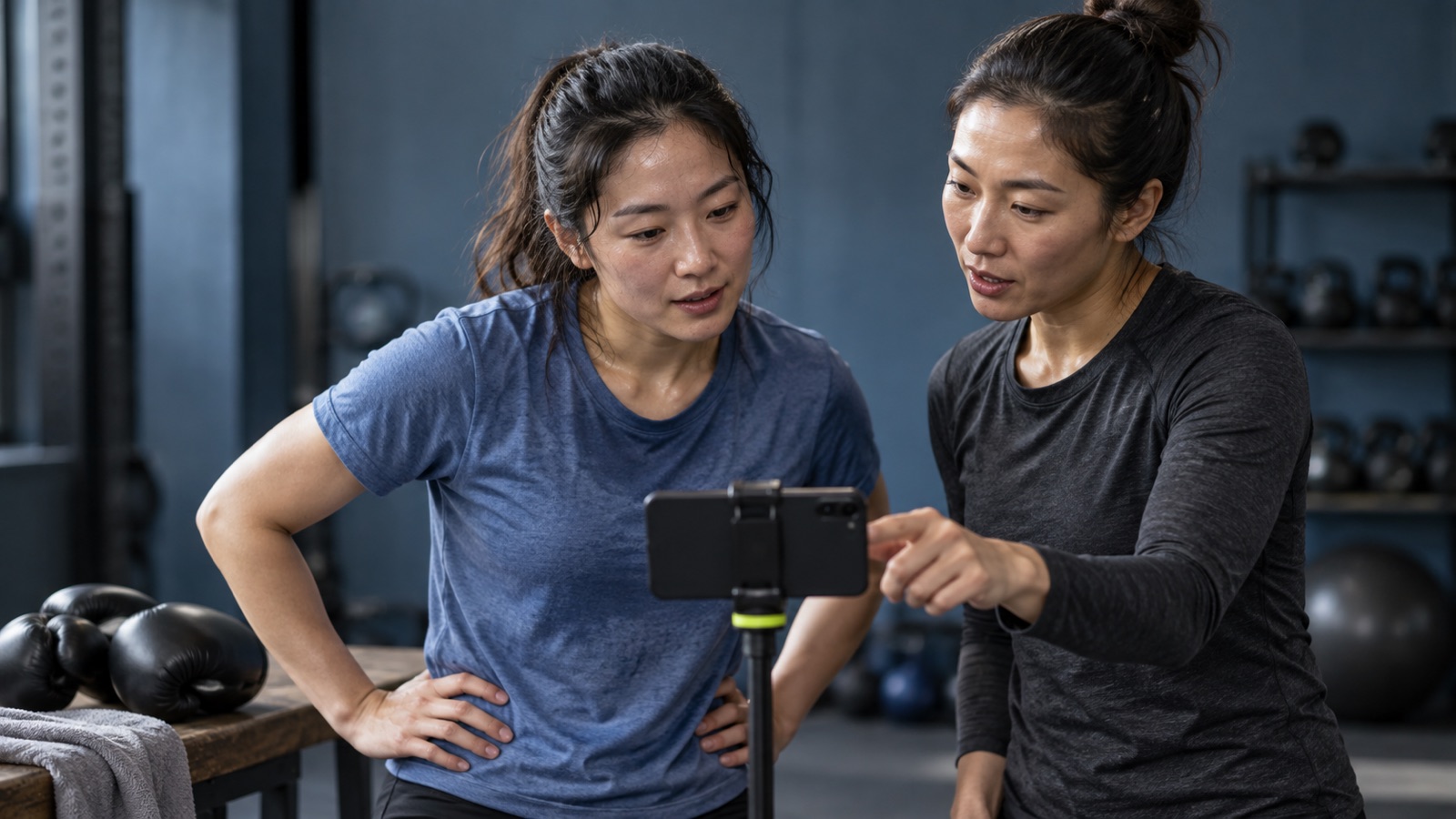
Use a brief video or a mirror in front of you, at a comfortable distance. Keep your gaze forward rather than turning your head to inspect your profile while punching. Review side footage afterward.
A visible return is something to discuss—not proof that your defense will work against a live opponent.
Elbows: in does not mean glued
England Boxing’s starting guard guidance keeps the forearms upright and the elbows from flaring outward. Fran Sands also uses the cue of keeping the elbows in when establishing the on-guard position. [1][2]
Try to understand the intended shape without inventing an extreme version. “Elbows in” does not mean forcing your upper arms painfully against your ribs or refusing to let them move during a punch.
Ask for a front view of the position. Then compare your setup before and after a simple movement. If your elbows gradually spread while you concentrate on something else, that gives you a specific question for the next lesson.
Do not try to correct every joint at once. Pick one visible change and check it at a manageable pace.
Chin: lower it without staring at the floor
“Chin down” is a direction, not an instruction to press your chin hard into your chest. The coaching references keep the head positioned so you can look ahead; the position should not be forced. [1][2]
Check where you are looking. If you have made your neck rigid and can only see the floor, you have probably turned a simple cue into something your coach did not intend.
Ask them to demonstrate the difference between a slight adjustment and an exaggerated tuck. That contrast is easier to apply than repeatedly telling yourself to tuck harder.
Relaxed does not mean floppy
Try this distinction: keep the position, reduce the unnecessary squeeze. In its guard guidance, England Boxing describes closed hands without sustained clenching because clenching creates tension. [1]
That does not mean making contact with a loose or badly formed fist. Impact technique needs its own instruction. For this observation, stay with unloaded, non-contact movement.
Notice whether you are holding your breath or bracing as though someone asked you to lift something heavy. Pause, breathe normally, and re-establish the position at an easy effort. Then try a single familiar action again.
Do not turn “relax your shoulders” into a rule that your shoulders must never move. You are looking for avoidable bracing between actions, not trying to immobilize part of a punch.
Use a short moving check
Here is an editorial observation exercise, not a defense test. Choose a clear space and a movement your coach has already shown you.
First: establish your starting guard and take one small, familiar step. Stop and notice what changed.
Next: repeat with a single familiar jab into the air, followed by its return. Watch one thing only—perhaps the other hand.
Finally: try the same action at a comfortable continuous rhythm. Stop before fatigue turns the exercise into a contest to keep your arms up.
Bring the clip or observation to class: “My right hand drops while I jab. Is this the correction you want me to practise?” That is more actionable than “Is my entire guard wrong?”
Avoid having a friend throw surprise punches to test it. This page is about noticing your position, not setting up unsupervised contact.
Why experienced boxers do not all look the same
You will see different guard positions in boxing. Sands describes changing the guard with factors such as range and the intended tactic. A close-range cover and an extended lead-hand position are not the same task. [3]
That does not make every position equally suitable for a beginner—or make a low lead hand an upgrade. A clip shows what one boxer chose in one situation, not all the decisions and reactions supporting that choice.
Build a recognizable starting position first. When you change it, know why, and work through the consequences with a coach.
Related questions
How high should my hands be in a boxing guard?
Near cheek level is a common starting point for a conventional beginner guard. Your coach may adjust the position for the task and your stance. The important follow-up is what your hands do when you step or punch—not just their height while standing still. [1][2]
Should I glue my elbows to my ribs?
No. Understand the cue as avoiding an unnecessarily flared starting position, not forcing a rigid squeeze. You still need to move and punch. Ask for a demonstration of the intended elbow position and compare it with your own comfortable setup. [1][2]
How far should I tuck my chin?
Enough to follow the position your coach shows you without forcing your neck or losing your forward view. Pressing your chin into your chest is not a better version of the cue. Use a side-view demonstration to clarify the difference. [1][2]
How do I keep a high guard without becoming tense?
Separate hand position from constant clenching. Begin with easy, non-contact movement, and notice unnecessary squeezing or breath-holding. Keep the task short enough to observe it. Pain or persistent difficulty needs individual attention, not simply a longer guard-hold challenge. [1]
Why do my hands drop after a combination?
A written description cannot establish the cause. Check whether the drop happens after a particular punch, only when you speed up, or mainly later in the session. Show one clear example to your coach instead of assuming that every hand-position issue needs more shoulder training.
Can I check my boxing guard in a mirror?
A mirror or short recording can help you notice a position. It cannot assess timing, incoming punches, or whether the guard suits a live situation. Treat it as a way to gather a useful question for coaching, not as an automatic form or safety assessment.
Sources and scope
[1] England Boxing — Boxing Coaching Handbook, Part 1 (2022); pages 67, 68, 73.
[2] Fran Sands / MyBoxingCoach — The Boxing Stance – Do it Right!.
[3] Fran Sands / MyBoxingCoach — Boxing Techniques – Use the Right Guard!.
[4] NHS — Shoulder pain.
The examples and reflection prompts in this guide are general suggestions, not an individual assessment. Use qualified instruction for technical corrections and appropriate medical care for symptoms or injuries.